

English


₹6401
(All inclusive*)
Paperback
Delivery Options
Please enter pincode to check delivery time.
*COD & Shipping Charges may apply on certain items.
Review final details at checkout.
Looking to place a bulk order? SUBMIT DETAILS
Delivery Options
Please enter pincode to check delivery time.
*COD & Shipping Charges may apply on certain items.
Review final details at checkout.
About The Book
Description
Author
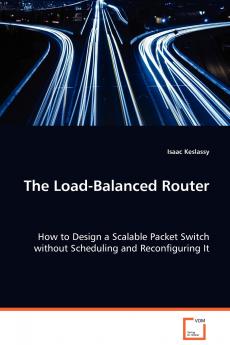
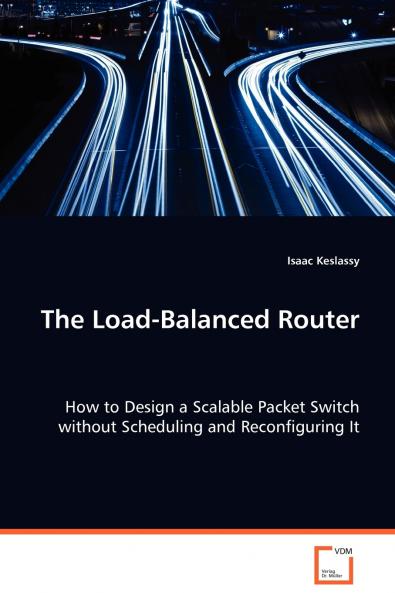
This book is about the load-balanced router a router architecture that is scalable and can guarantee a full capacity. A load-balanced router consists of two stages. First a load-balancing stage spreads arriving packets equally among linecards. Then a forwarding stage transfers packets from the linecards to their final destination. A load-balanced router does not use any centralized scheduler as most current router architectures. Therefore it can scale while providing the throughput guarantees needed by network operators. It this book we show how to implement the load-balanced router using a single passive optical switch fabric with no reconfigurations while current routers commonly need switch fabrics with fast reconfiguration times. Further we introduce a simple distributed algorithm that can avoid packet reordering a common problem of load-balanced architectures. Finally we present a practical switch fabric architecture that would enable load-balanced routers to scale to higher numbers of interfaces. We conclude by showing that the load-balanced router can help provide the scalability and capacity guarantees needed in the Internet.

Piracy-free

Assured Quality

Secure Transactions

Fast Delivery

Sustainably Printed
Details
ISBN 13
9783639076486
Publication Date
-22-08-2008
Pages
-124
Weight
-179 grams
Dimensions
-150x220x6.97 mm
