


English



₹10696
₹12795
16.4% OFF
(All inclusive*)
Hardback
Delivery Options
Please enter pincode to check delivery time.
*COD & Shipping Charges may apply on certain items.
Review final details at checkout.
Looking to place a bulk order? SUBMIT DETAILS
Delivery Options
Please enter pincode to check delivery time.
*COD & Shipping Charges may apply on certain items.
Review final details at checkout.
About The Book
Description
Author
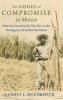
In this political history of twentieth-century Mexico Gladys McCormick argues that the key to understanding the immense power of the long-ruling Partido Revolucionario Institucional (PRI) is to be found in the countryside. Using newly available sources including declassified secret police files and oral histories McCormick looks at large-scale sugar cooperatives in Morelos and Puebla two major agricultural regions that serve as microcosms of events across the nation. She argues that Mexico&#x2019;s rural peoples despite shouldering much of the financial burden of modernization policies formed the PRI regime&#x2019;s most fervent base of support.<br/><br/>McCormick demonstrates how the PRI exploited this support using key parts of the countryside to test and refine instruments of control &#x2014; including the regulation of protest manipulation of collective memories of rural communities and selective application of violence against critics &#x2014; that it later employed in other areas both rural and urban. With three peasant leaders brothers named Rub&#xE9;n Porfirio and Antonio Jaramillo at the heart of her story McCormick draws a capacious picture of peasant activism disillusion and compromise in state formation revealing the basis for an enduring political culture dominated by the PRI. On a broader level McCormick demonstrates the connections among modern state building in Latin America the consolidation of new forms of authoritarian rule and the deployment of violence on all sides.

Piracy-free

Assured Quality

Secure Transactions

Fast Delivery

Sustainably Printed
Details
ISBN 13
9781469628943
Publication Date
-11-04-2016
Pages
-302
Weight
-524 grams
Dimensions
-156x234x20.64 mm
