

English


Hardback
₹3408
(All inclusive*)
Delivery Options
Please enter pincode to check delivery time.
*COD & Shipping Charges may apply on certain items.
Review final details at checkout.
Looking to place a bulk order? SUBMIT DETAILS
Delivery Options
Please enter pincode to check delivery time.
*COD & Shipping Charges may apply on certain items.
Review final details at checkout.
About The Book
Description
Author
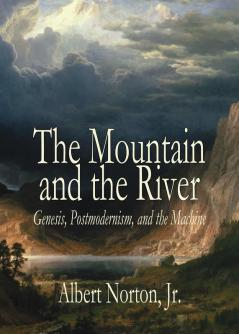
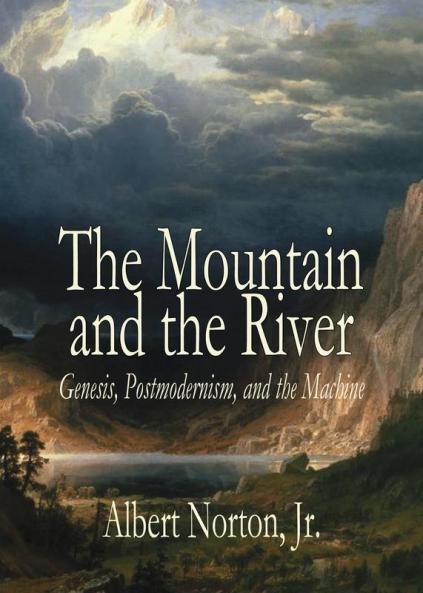
<p><span style=color: rgba(0 0 0 1)>Western civilization is at a precarious crossroad.&nbsp;It relies on objectivity of truth and of right and wrong a first principle until about the turn of the twentieth century.&nbsp;But in more recent years postmodern ideas of truth-formation began to gain traction and Christianity lost its grip on Western cultures in favor of secular ideologies.&nbsp;The result has been the bloodiest century in human history and the accelerated proliferation of oppressive ideologies.&nbsp;Postmodern critiques during this time have become general in the culture like a virus escaped from the lab.&nbsp;</span></p><p><br></p><p><span style=color: rgba(0 0 0 1)>We live this life in the body conscious of a vaguely felt lack of completeness.&nbsp;We may describe it as alienation leaving open-ended what about us is being alienated from what.&nbsp;The Genesis worldview tells us the alienation is a natural condition of our existence unfortunately.&nbsp;It is the result of our moral agency and our two-nature spiritual and material essence:&nbsp;we are dust-formed but also God-breathed.&nbsp;If we reject the Genesis worldview the sense of alienation does not go away and so we grope around trying to explain it.&nbsp;Hence postmodern theory.&nbsp;&nbsp;</span></p><p><br></p><p><span style=color: rgba(0 0 0 1)>This book is about the chasm between the Genesis worldview and that of postmodernism.&nbsp;The differences are not merely competing truth claims but competing claims about how truth is formed in the first place.&nbsp;And not only truth but right and wrong and even beauty.&nbsp;Where do these ideals originate and why do we struggle so much now in our pursuit of them?&nbsp;There is an answer and we can find our way to it by rejecting disastrous flirtations with postmodernist critique and negation to recover individual human dignity and freedom and even a renewed sense of brotherhood by appeal to universal values even in our differences.</span></p><p><br></p>

Piracy-free

Assured Quality

Secure Transactions

Fast Delivery

Sustainably Printed
Details
ISBN 13
9781943003808
Publication Date
-06-06-2023
Pages
-336
Weight
-544 grams
Dimensions
-152x229x22.23 mm
