


English


₹1920
(All inclusive*)
Paperback
Delivery Options
Please enter pincode to check delivery time.
*COD & Shipping Charges may apply on certain items.
Review final details at checkout.
Looking to place a bulk order? SUBMIT DETAILS
Delivery Options
Please enter pincode to check delivery time.
*COD & Shipping Charges may apply on certain items.
Review final details at checkout.
About The Book
Description
Author(s)
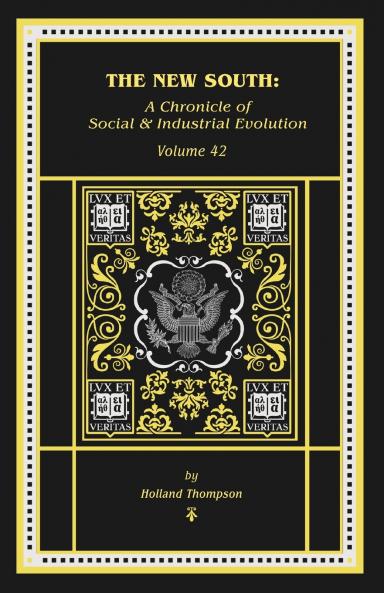
<p><span style=color: rgba(83 90 98 1); background-color: rgba(255 255 255 1)>In 1912&nbsp;Theodore&nbsp;Roosevelt&nbsp;addressed the&nbsp;American&nbsp;Historical&nbsp;Association to&nbsp;call&nbsp;for&nbsp;American&nbsp;history&nbsp;to be&nbsp;written&nbsp;as compelling&nbsp;stories&nbsp;of&nbsp;literary&nbsp;quality.&nbsp;Editor&nbsp;Allen&nbsp;Johnson of Yale&nbsp;University&nbsp;responded&nbsp;by&nbsp;publishing&nbsp;the&nbsp;Chronicles of America series:&nbsp;50 succinct&nbsp;volumes&nbsp;on&nbsp;regional and&nbsp;thematic American&nbsp;history.&nbsp;These&nbsp;books&nbsp;intended&nbsp;for secondary&nbsp;schools&nbsp;and&nbsp;college&nbsp;students&nbsp;are expository&nbsp;works&nbsp;of&nbsp;American history composed&nbsp;by&nbsp;competent historians&nbsp;in&nbsp;the&nbsp;1920's&nbsp;well&nbsp;before&nbsp;the special&nbsp;pleading&nbsp;and upending&nbsp;of&nbsp;social&nbsp;norms&nbsp;typical&nbsp;of&nbsp;histories&nbsp;after&nbsp;1970. This series&nbsp;is&nbsp;focused on&nbsp;the&nbsp;mainstream&nbsp;of American political&nbsp;life&nbsp;and&nbsp;leadership&nbsp;from&nbsp;its initial&nbsp;volumes&nbsp;on&nbsp;Native&nbsp;Americans and&nbsp;European&nbsp;colonists&nbsp;to&nbsp;its&nbsp;final&nbsp;volumes on&nbsp;Woodrow&nbsp;Wilson&nbsp;Canada&nbsp;and&nbsp;the&nbsp;Hispanic&nbsp;Republics&nbsp;to&nbsp;our&nbsp;South.</span></p><p></p><p>Holland Thompson's history of the New South tells the story of the return to home rule after the end of Reconstruction and the rise of the Bourbon Democrats and industrial progressives in Dixie. The South's slow adaptation from agriculture to industry was accompanied by the development at the turn of the century of Jim Crow segregation laws and the new mill towns that brought textiles and other industries into the South. The book includes an editor's bibliography that takes into account the agrarian movement that opposed the industrial development in the early 20th century and the more recent scholarly literature on the period.</p>

Piracy-free

Assured Quality

Secure Transactions

Fast Delivery

Sustainably Printed
Details
ISBN 13
9781088142257
Publication Date
-22-08-2025
Pages
-284
Weight
-285 grams
Dimensions
-129x198x15.14 mm
