


English




Paperback
₹3948
(All inclusive*)
Delivery Options
Please enter pincode to check delivery time.
*COD & Shipping Charges may apply on certain items.
Review final details at checkout.
Looking to place a bulk order? SUBMIT DETAILS

Piracy-free

Assured Quality

Secure Transactions
About The Book
Description
Author
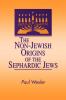
<p><b>The author uses linguistic ethnographic and historical evidence to support his theory that the origins of Sephardic Jews are predominantly Berber and Arab.</b></p><p>In <i>The Non-Jewish Origins of the Sephardic Jews</i> Paul Wexler presents a groundbreaking theory that challenges the conventional narrative of Sephardic Jewish origins. Through an in-depth exploration of linguistic historical and ethnographic evidence Wexler argues that the Sephardic Jews-long believed to be the descendants of ancient Judaeans-are in fact the descendants of Berber and Arab proselytes who converted to Judaism during the medieval period.</p><p>Drawing from an extensive array of sources including linguistic studies of Judeo-Arabic Ladino and Yiddish Wexler builds a compelling case for the North African roots of Sephardic Jewry. He identifies traces of Berber and Arab cultures embedded within the language religion and folk traditions of Sephardic Jews revealing an intricate tapestry of cultural exchange and religious transformation.</p><p>The book also revises the historical understanding of the term <i>Sephardic</i> and the role of conversion in the formation of Jewish communities across North Africa Spain and the broader Mediterranean world. Wexler's meticulous analysis highlights the significant influence of Arabic and Berber linguistic features on Judeo-Spanish and Judeo-Arabic challenging long-held assumptions about the Hispanicity of Sephardic Jews.</p><p>Incorporating elements of religious syncretism and the cultural assimilation of Berber and Arab practices Wexler's study offers a new lens through which to view the complex processes of Judaization in the Iberian Peninsula. This comprehensive and original work will appeal to scholars and readers interested in Jewish history linguistic anthropology and the rich cultural legacy of the Sephardic Jews.</p>
Piracy-free
Assured Quality
Secure Transactions
Delivery Options
Please enter pincode to check delivery time.
*COD & Shipping Charges may apply on certain items.
Review final details at checkout.
Details
ISBN 13
9780791427965
Publication Date
-15-02-1996
Pages
-340
Weight
-461 grams
Dimensions
-152x229x19.29 mm
