




This Book is Out of Stock!
English





Paperback
₹5091
₹6653
23.48% OFF
(All inclusive*)
Delivery Options
*COD & Shipping Charges may apply on certain items.
Review final details at checkout.
Looking to place a bulk order? SUBMIT DETAILS

Piracy-free

Assured Quality

Secure Transactions
About The Book
Description
Author
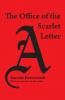
<p><em>The Scarlet Letter</em> has proved our most enduring classic writes Sacvan Bercovitch because it is the liberal example par excellence of art as ideological mimesis. To understand the office of the A is to see how culture empowers symbolic form including forms of dissent and how symbols participate in the dynamics of culture including the dynamics of constraint.</p><p>With an approach that both reflects and contests developments in literary studies Bercovitch explores these connections from two perspectives: first he examines a historical reading of the novel's unities; and then a rhetorical analysis of key mid-nineteenth-century issues at home and abroad. In order to highlight the relation between rhetoric and history he focuses on the point at which the scarlet letter does its office at last the moment when Hester decides to come home to America.</p><p>In <em>The Office of The Scarlet Letter</em> Bercovitch argues that the process by which the United States usurped America for itself symbolically is also the process by which liberalism established political and economic dominance. In the course of his study he offers sustained discussions of Hawthorne's irony and ambiguity of aesthetic and social strategies of cohesion and of the conundrums of liberal dissent. Winner of the Modern Language Association's James Russell Lowe prize <em>The Office of The Scarlet Letter</em> provides a theoretical redefinition of the function of symbolism in culture and an exemplary literary-ideological reading of a major text.</p>
Piracy-free
Assured Quality
Secure Transactions
*COD & Shipping Charges may apply on certain items.
Review final details at checkout.
₹5091
₹6653
23% OFF
Paperback
Out Of Stock
All inclusive*
Details
ISBN 13
9781412849807
Publication Date
-15-03-2013
Pages
-212
Weight
-252 grams
Dimensions
-138x216x11.49 mm
