


This Book is Out of Stock!
English


Hardback
₹9240
₹12554
26.4% OFF
(All inclusive*)
Delivery Options
*COD & Shipping Charges may apply on certain items.
Review final details at checkout.
Looking to place a bulk order? SUBMIT DETAILS
*COD & Shipping Charges may apply on certain items.
Review final details at checkout.
₹9240
₹12554
26% OFF
Hardback
Out Of Stock
All inclusive*
About The Book
Description
Author
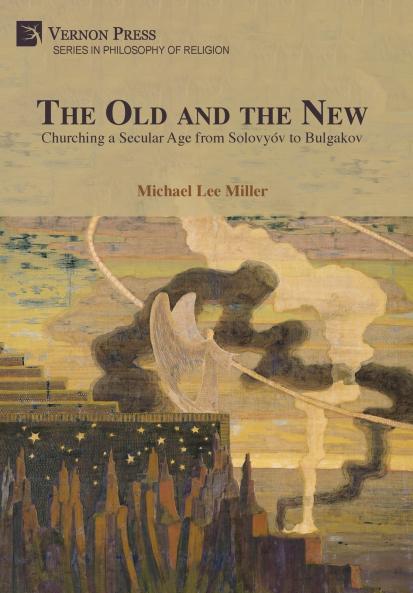
<p>In the midst of exile from his native Russia in the mid-1930s Fr Sergii Bulgakov identified his basic aspiration as an Orthodox theologian to be a 'positive overcoming of Modernity' - in fact a continuation of the efforts of his great 19th-century inspiration Vladimir Solovyóv to reconstruct Christian thought and culture in the face of the unprecedented challenges posed by the Enlightenment and the era of revolutionary upheaval. But Bulgakov's theological vision also involves a distinctive revision of Solovyóv's programme whose 'residual Hegelianism' continually threatens to level out speculative reason and mystagogical faith progress in history and 'the Kingdom not of this World'. Bulgakov refuses any such levelling: instead he consummates the 'apocalyptic turn' Solovyóv had already commenced in the years immediately preceding his premature death in 1900.</p><p>The resulting preference for the paradox of 'antinomy' over the closure of 'dialectic' comes to light in relation to four themes running through Bulgakov's thinking in the decades falling between his rejection of Marxism and the commencement of his mature systematic-theological work in the 1930s: history work knowledge and power. </p>

Piracy-free

Assured Quality

Secure Transactions

Fast Delivery

Sustainably Printed
Details
ISBN 13
9781622738557
Publication Date
-28-02-2025
Pages
-446
Weight
-688 grams
Dimensions
-152x229x25.4 mm
