


by
English



Paperback
₹5559
(All inclusive*)
Delivery Options
Please enter pincode to check delivery time.
*COD & Shipping Charges may apply on certain items.
Review final details at checkout.
Looking to place a bulk order? SUBMIT DETAILS

Piracy-free

Assured Quality

Secure Transactions
About The Book
Description
Author(s)
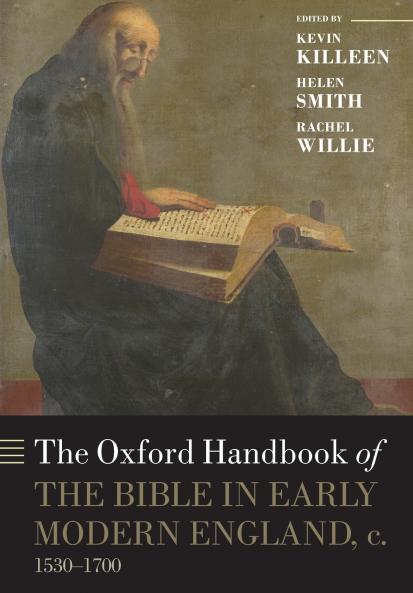
The Bible was by any measure the most important book in early modern England. It preoccupied the scholarship of the era and suffused the idioms of literature and speech. Political ideas rode on its interpretation and deployed its terms. It was intricately related to the project of natural philosophy. And it was central to daily life at all levels of society from parliamentarian to preacher from the ''boy that driveth the plough'' famously invoked by Tyndale to women across the social scale. It circulated in texts ranging from elaborate folios to cheap catechisms; it was mediated in numerous forms as pictures songs and embroideries and as proverbs commonplaces and quotations.Bringing together leading scholars from a range of fields The Oxford Handbook of the Bible in Early Modern England 1530-1700 explores how the scriptures served as a generative motor for ideas and a resource for creative and political thought as well as for domestic and devotional life.Sections tackle the knotty issues of translation the rich range of early modern biblical scholarship Bible dissemination and circulation the changing political uses of the Bible literary appropriations and responses and the reception of the text across a range of contexts and media. Where existing scholarship focuses typically on Tyndale and the King James Bible of 1611 The Oxford Handbook of the Bible in England 1530-1700 goes further tracing the vibrant and shifting landscape of biblical culture in the two centuries following the Reformation.
Piracy-free
Assured Quality
Secure Transactions
Delivery Options
Please enter pincode to check delivery time.
*COD & Shipping Charges may apply on certain items.
Review final details at checkout.
Details
ISBN 13
9780198828228
Publication Date
-16-08-2018
Pages
-808
Weight
-1280 grams
Dimensions
-170x244x40.76 mm
