



English



Paperback
₹2450
(All inclusive*)
Delivery Options
Please enter pincode to check delivery time.
*COD & Shipping Charges may apply on certain items.
Review final details at checkout.
Looking to place a bulk order? SUBMIT DETAILS

Piracy-free

Assured Quality

Secure Transactions
About The Book
Description
Author
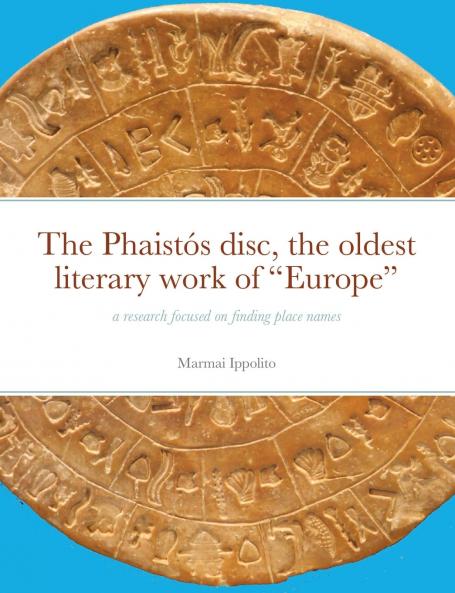
The author's more than twenty-year research on Phaistós' disc and on Cretan 'hieroglyphic' writing offers here a partial but original interpretation of the enigma that for over a century engages the scholars of the Minoan civilization. Through the combinatorial method of internal analysis of the hieroglyphic sequence noted a space free of signs and evaluated the importance of the correction of errors he demonstrates how the deductions drawn from the superimposition of signs must now be revised in the light of the deformation of other signs caused by the impression on the soft clay of the sign on their right. In March 2018 by means of photographic enlargements he finally discovers on Phaistós' disc a detail never before considered by anyone which proves in an incontrovertible way the verse of writing from left to right from the center to the periphery of the disc.Previously no one seems to have grasped the need to examine the document as a printed text reproducing a model or type-graphic project. Such modality in itself involves a different approach of analysis that can distinguish and discern the material factors (signs impressed on clay their overlapping and deformations) from linguistic-grammatical factors (interpretation of the blank space at the end of the text corrections of words and identification of the oblique stroke as a marker of proper names). Through this approach the scholar was able to try not only the direction of writing but to highlight the function of the oblique stroke and the meaning of the rhythm of the triplets of words until he identified the two most important place names for the inhabitants of ancient Minoan city.
Piracy-free
Assured Quality
Secure Transactions
Delivery Options
Please enter pincode to check delivery time.
*COD & Shipping Charges may apply on certain items.
Review final details at checkout.
Details
ISBN 13
9781716791574
Publication Date
-03-09-2020
Pages
-170
Weight
-320 grams
Dimensions
-189x246x11.73 mm
