

English


Paperback
₹4002
₹4302
6.97% OFF
(All inclusive*)
Delivery Options
Please enter pincode to check delivery time.
*COD & Shipping Charges may apply on certain items.
Review final details at checkout.
Looking to place a bulk order? SUBMIT DETAILS

Piracy-free

Assured Quality

Secure Transactions
About The Book
Description
Author(s)
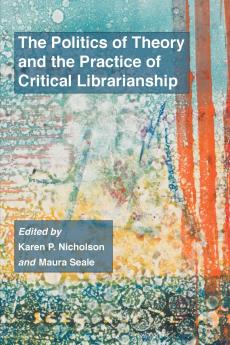
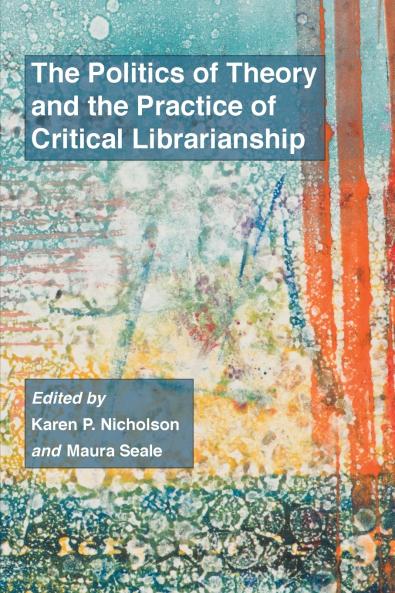
Over the past fifteen years librarians have increasingly looked to theory as a means to destabilize normative discourses and practices within LIS to engage in inclusive and non-authoritarian pedagogies and to organize for social justice. Critlib short for critical librarianship is variously used to refer to a growing body of scholarship an intellectual or activist movement within librarianship an online community that occasionally organizes in-person meetings and an informal Twitter discussion space active since 2014 identified by the #critlib hashtag. Critlib aims to engage in discussion about critical perspectives on library practice but it also seeks to bring social justice principles into our work in libraries (http: //critlib.org/about/).The role of theory within librarianship in general and critical librarianship more specifically has emerged as a site of tension within the profession. In spite of an avowedly activist and social justice-oriented agenda critlib--as an online discussion space at least--has come under fire from some for being inaccessible exclusionary elitist and disconnected from the practice of librarianship empirical scholarship and on-the-ground organizing for socioeconomic and political change. At the same time critical librarianship may be becoming institutionalized as seen in the Framework for Information Literacy for Higher Education the January 2015 editorial in College and Research Libraries that specifically solicited articles using critical theory or humanistic approaches and the publication of several critical librarianship monographs by the Association of College and Research Libraries.This book features original research reflective essays and conversations and dialogues that consider the relationships between theory practice and critical librarianship through the lenses of the histories of librarianship and critical librarianship intellectual and activist communities professional practices information literacy library technologies library education specific theoretical approaches and underexplored epistemologies and ways of knowing.Karen Nicholson is Manager Information Literacy at the University of Guelph and a PhD candidate (LIS) at Western University both in Ontario. Her research interests include information literacy and critical university studies.Maura Seale is History Librarian at the University of Michigan and was previously Collections Research and Instruction Librarian at Georgetown University. She received an MA in American Studies from the University of Minnesota and an MSI from the University of Michigan. She welcomes comments and can be found on Twitter at @mauraseale.
Piracy-free
Assured Quality
Secure Transactions
Delivery Options
Please enter pincode to check delivery time.
*COD & Shipping Charges may apply on certain items.
Review final details at checkout.
Details
ISBN 13
9781634000307
Publication Date
-01-03-2018
Pages
-276
Weight
-378 grams
Dimensions
-152x229x14.72 mm
