

English


Hardback
₹5955
(All inclusive*)
Delivery Options
Please enter pincode to check delivery time.
*COD & Shipping Charges may apply on certain items.
Review final details at checkout.
Looking to place a bulk order? SUBMIT DETAILS
Delivery Options
Please enter pincode to check delivery time.
*COD & Shipping Charges may apply on certain items.
Review final details at checkout.
About The Book
Description
Author(s)
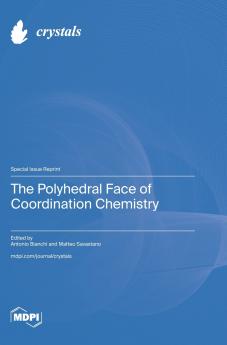
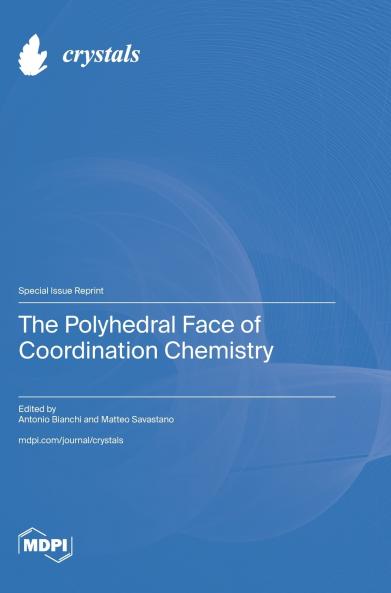
<p>This Special Issue intends to celebrate the multifaceted aspects of coordination chemistry by showcasing original work that demonstrates the liveliness and colourful nature of different branches of this discipline. The development of coordination chemistry as we know it owes much to crystallography with solid-state structural evidence playing a fundamental role in the definition and understanding of coordination compounds. Still the very concept of coordination chemistry has expanded beyond the classical metal-ligand complexes: today it encompasses supramolecular and bioinorganic compounds metal-organic frameworks and even organometallic species. The common thread to this apparently diverse range of topics lies in the unique structural relationship as addressed by Donald Cram that keeps a complex together applying to both traditional coordination compounds as well as to host-guest systems. Solid state remains the chief technique for elucidating the interplay of interactions involved in a complex species and the precise spatial relationships among its constituents. Yet the application of such knowledge and thus of broadly interpreted coordination chemistry easily extends to catalysis recognition and sensing in solution metals in medicine crystal engineering material and reticular chemistry and much more.</p>

Piracy-free

Assured Quality

Secure Transactions

Fast Delivery

Sustainably Printed
Details
ISBN 13
9783725812752
Publication Date
-30-05-2024
Pages
-142
Weight
-346 grams
Dimensions
-170x244x12.7 mm
