


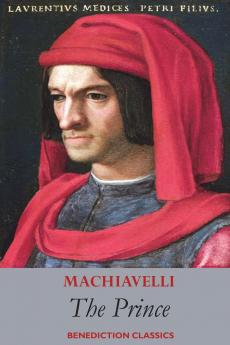
English

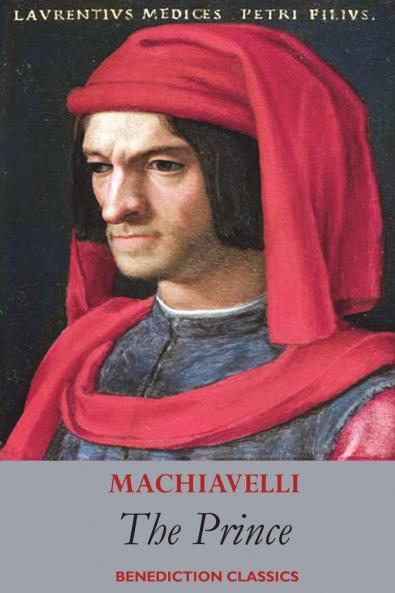


Paperback
₹528
(All inclusive*)
Delivery Options
Please enter pincode to check delivery time.
*COD & Shipping Charges may apply on certain items.
Review final details at checkout.
Looking to place a bulk order? SUBMIT DETAILS

Piracy-free

Assured Quality

Secure Transactions
About The Book
Description
Author
<p><strong>Everyone sees what you seem to be few know what you really are; and those few do not dare take a stand against the general opinion.</strong> - Machiavelli <em>The Prince</em>.</p><p><strong>Contemporary Americans perhaps more than anyone else could learn a lesson or two from Machiavelli.</strong> -&nbsp;John T. Scott Robert Zaretsky and Michael Gonchar <em>The New York Times.</em></p><p>&nbsp;Machiavelli's <em>The Prince</em> is one of those rare brain-children with which all respectable minds claim acquaintance. -- Lloyd Eshleman <em>The New York Times.</em></p><p>The first method for estimating the intelligence of a ruler is to look at the men he has around him. - Machiavelli <em>The Prince</em>.</p><p>His city's tempestuous history taught Machiavelli a lesson he tries to convey to future readers: that no one man can overpower a free people unless they let him. - Erica Benner <em>The Guardian</em>.</p><p>Machiavelli is often portrayed as the first honest teacher of dishonest politics. - Erica Benner <em>The Guardian</em>.</p><p></p><p><strong><em>The Prince</em> is a manual for those who wish to win and keep power</strong>. &nbsp;Plato and Aristotle viewed politics as an aspect of ethics. They described an ideal state and presumed that a good leader would aim to create an ideal state and that the pursuit of virtue would lead to the success of the leader and the state. &nbsp;&nbsp;Niccolò Machiavelli set aside political ideals and went straight to the truth of how things really work. &nbsp;For him virtue was the set of characteristics that lead to success. &nbsp;&nbsp;Machiavelli had read widely on the military and political history of Rome Greece and Persia and from his position as second chancellor of the Florentine Republic in charge of diplomacy and warfare he observed the fortunes of the warring Italian states and their leaders. &nbsp;Florence was caught between the much greater powers of Milan Venice and Rome and relied more on diplomatic strategy than military strength for its security.</p><p>Machiavelli's careful concise analysis of human nature over the ages has made <em>The Prince</em> as important in political science as Plato's <em>Republic</em> and Thomas More's <em>Utopia</em> and it deserves a careful reading.</p><p><strong>Niccolò Machiavelli</strong> (1469-1527) was an Italian Renaissance political philosopher and statesman secretary of the Florentine republic. &nbsp;His most famous work is <em>The Prince</em>. &nbsp;&nbsp;However his writing includes the lengthy <em>Discourses on Livy </em>and works of poetry fiction and drama. &nbsp;Machiavelli is regarded as the first political scientist. </p><p></p><p></p>
Piracy-free
Assured Quality
Secure Transactions
Delivery Options
Please enter pincode to check delivery time.
*COD & Shipping Charges may apply on certain items.
Review final details at checkout.
Details
ISBN 13
9781789434392
Publication Date
-05-08-2025
Pages
-70
Weight
-114 grams
Dimensions
-156x234x4.26 mm
