

English


Paperback
₹2880
₹3202
10.06% OFF
(All inclusive*)
Delivery Options
Please enter pincode to check delivery time.
*COD & Shipping Charges may apply on certain items.
Review final details at checkout.
Looking to place a bulk order? SUBMIT DETAILS

Piracy-free

Assured Quality

Secure Transactions
About The Book
Description
Author(s)
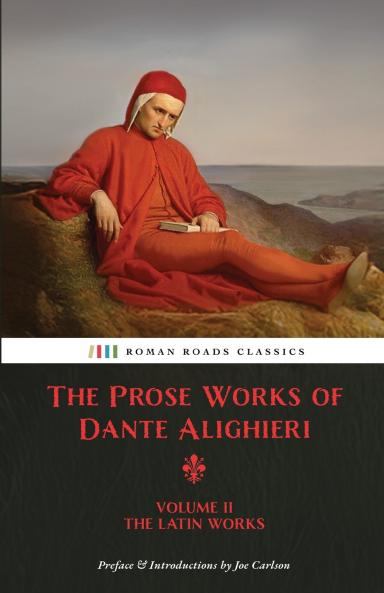
<p><strong>Collected for the first time in English the complete prose works of Dante Alighieri.</strong></p><p>Dante Alighieri (1265-1321) is known the world over for the&nbsp;<em>Divine Comedy</em> arguably the greatest poem ever written. But that was not all he wrote. Several other prose texts round out the great poet's ouevre. In these two volumes we have the rest of what Dante wrote.&nbsp;</p><p></p><p><strong>Volume I: The Italian Works (this book):</strong>&nbsp;<em>The Vita nuova&nbsp;</em>and<em>&nbsp;The Convivio</em></p><p><strong>Volume II: The Latin Works (sold separately):</strong>&nbsp;<em>De vulgari eloquentia De monarchia Epistolae&nbsp;</em>and<em>&nbsp;Questio de aqua et terra.</em></p><p></p><p><strong>About this Collection</strong></p><p>These two volumes bring together for the first time in English the other works of Dante. Most readers of Dante are only acquainted with the&nbsp;<em>Divine Comedy</em> and understandably so. Whereas&nbsp;<em>Vita nuova&nbsp;</em>combines poetry and prose to praise the loveliness of Beatrice the&nbsp;<em>Convivio&nbsp;</em>does the same in praise of Philosophy. Had it been completed (it was abandoned just before Dante began the&nbsp;<em>Comedy</em>) the&nbsp;<em>Convivio</em>&nbsp;would have been a major achievement. The first philosophical treatise in the Italian language (and almost in any vernacular outside of Latin!) the&nbsp;<em>Convivio</em>&nbsp;brings together Dante's intense love of reason and theology poetry and philosophy cosmology and ethics. Even in its unfinished state it remains a fascinating testimony to the mind behind the&nbsp;<em>Comedy</em>. These two works both originally written in Italian comprise<em>&nbsp;Volume I</em>.</p><p></p><p><em>Volume II: The Latin Works</em>&nbsp;include&nbsp;<em>De vulgari eloquentia</em>&nbsp;(On the Eloquence of the Vernacular)&nbsp;<em>De monarchia</em>&nbsp;(On the Monarchy) Dante's thirteen surviving epistles and the manuscript of a scientific lecture on Aristotelean geography titled&nbsp;<em>Questio de aqua et terra</em>. Book 1 of the&nbsp;<em>De vulgari eloquentia</em>&nbsp;defends the use of the vernacular languages (mainly French Spanish and Italian) to discuss the noble themes of love and war while Book 2 leaves us with an unfinished lecture on poetry its forms styles and its unique power to communicate.<em>&nbsp;De monarcha</em>&nbsp;is a political treatise in which he argues for world empire as the best (and most Christian!) form of government. Arguing indirectly against the papal bull&nbsp;<em>Unam Sanctam</em> Dante clearly articulates and distinguishes the twin authorities of the emperor and the pope. Contrary to prevailing Catholic thought at the time he argued that the political leader received his authority directly from Christ not mediated through the pope. Finally as noted above the&nbsp;<em>Questio de aqua et terra</em>dives into medieval cosmological issues. Though his natural science is obsolete his tight reasoning presents a sharp mind attuned to the nuances of scientific and philosophical arguments.&nbsp;</p><p></p><p>Compiled here together for the first time are the excellent translations of Charles Eliot Norton (<em>Vita nuova</em>) Philip H. Wicksteed (<em>Convivio</em>&nbsp;<em>De vulgari eloquentia</em> and&nbsp;<em>Questio</em>) Aurelia Henry Reinhardt (<em>De monarchia</em>) and Paget Toynbee (<em>Epistolae</em>) lightly edited for a modern audience and organized to conform to modern reference systems. In addition to original introductions to each of the works these volumes include a bevy of new notes and explanations from Dante scholar and translator Joe Carlson in which he identifies the numerous intertextual allusions to the&nbsp;<em>Comedy</em>&nbsp;contained within these works.</p>
Piracy-free
Assured Quality
Secure Transactions
Delivery Options
Please enter pincode to check delivery time.
*COD & Shipping Charges may apply on certain items.
Review final details at checkout.
Details
ISBN 13
9781963505153
Publication Date
-21-05-2025
Pages
-266
Weight
-317 grams
Dimensions
-140x216x14.2 mm
