



This Book is Out of Stock!
English



Hardback
₹7139
₹8075
11.59% OFF
(All inclusive*)
Delivery Options
*COD & Shipping Charges may apply on certain items.
Review final details at checkout.
Looking to place a bulk order? SUBMIT DETAILS

Piracy-free

Assured Quality

Secure Transactions
About The Book
Description
Author(s)
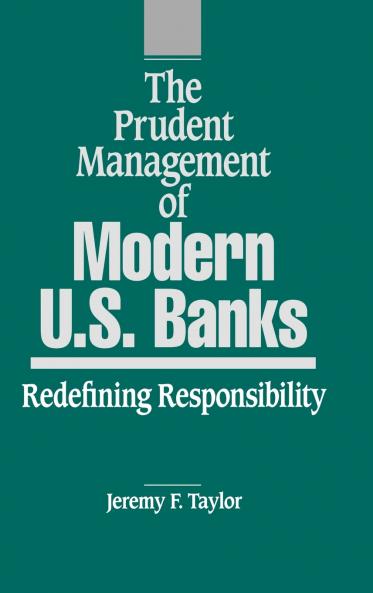
Without the internal application of standards of prudence in bank management regulatory restraints will always be inadequate. A complete theory of prudence is developed in these pages covering decision mechanisms and banking culture using numerous specific examples of actual bank imprudence. The theory is applied across bank functions of credit investments funding and management creating practical principles accessible to bank managers regulators and all those dealing with banking issues in the public domain.The shortcomings of the regulatory approach to bank supervision are discussed with particular attention given to recent acts of regulation. Historical bank examples mostly recent of bank imprudence are described. A strategy of decision-making referred to as Recursive Managerialism (which is inherently prudential) is discussed in detail and is prescribed as the preferred mode of decision in banking. The role of balance in the risks of banking in the pursuit of catastrophe avoidance is proposed as a negative form of prudence. This concept is shown to be associated with public interest issues so serving similar goals to those presently sought through regulations. This structure provides the basis to evaluate decisions in specific areas of bank functions: credit investments funding and management. In the course of the chapters in Part II a positive version of prudence is advanced to complement the earlier negative version and specific areas of modern banking issues--such as mergers and acquisitions--and the role of interstate banking are given prudential treatment.
Piracy-free
Assured Quality
Secure Transactions
*COD & Shipping Charges may apply on certain items.
Review final details at checkout.
₹7139
₹8075
11% OFF
Hardback
Out Of Stock
All inclusive*
Details
ISBN 13
9780899308524
Publication Date
-06-06-1994
Pages
-254
Weight
-458 grams
Dimensions
-156x234x15.88 mm
