

English


₹3339
₹3992
16.36% OFF
(All inclusive*)
Paperback
Delivery Options
Please enter pincode to check delivery time.
*COD & Shipping Charges may apply on certain items.
Review final details at checkout.
Looking to place a bulk order? SUBMIT DETAILS
Delivery Options
Please enter pincode to check delivery time.
*COD & Shipping Charges may apply on certain items.
Review final details at checkout.
About The Book
Description
Author
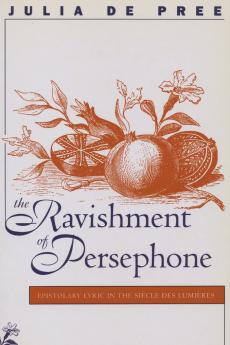
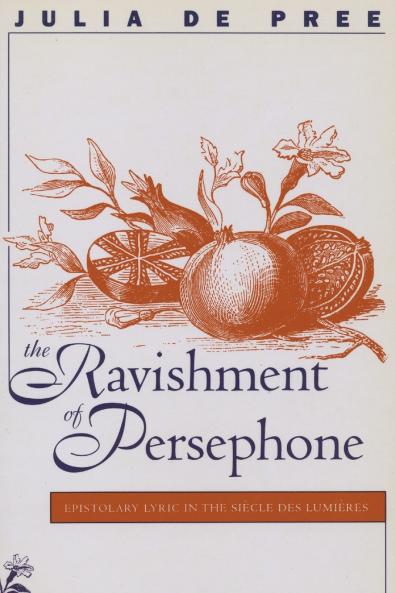
This study delineates a theory of epistolary lyric that refutes historical notions of a <i>siècle sans poésie</i>. Julia De Pree argues that monophonic epistolary texts written during the <i>Ancien Régime</i> both reflect and resist the Classical legacy and at the same time anticipate the nineteenth-century prose poem. De Pree illustrates her theory of epistolary lyric through readings in the historical canon (Montesquieu Diderot Rousseau Laclos) but emphasizes the contributions of the <i>épistolière</i>: Françoise de Graffigny Isabelle de Charrière and Marie-Jeanne Riccoboni. She argues that through their relatively short length their incorporation of blank space and their monophonic voice female-authored letter-texts articulate epistolary lyric at the intersection of narrative theatrical and poetic codes. De Pree concludes that as a plural and protean form epistolary lyric anticipates the so-called poetic revolution(s) that transformed nineteenth-century French lyric.

Piracy-free

Assured Quality

Secure Transactions

Fast Delivery

Sustainably Printed
Details
ISBN 13
9780807892626
Publication Date
-01-01-1998
Pages
-168
Weight
-237 grams
Dimensions
-152x229x9.86 mm
