



This Book is Out of Stock!
English


₹3907
(All inclusive*)
Paperback
Delivery Options
*COD & Shipping Charges may apply on certain items.
Review final details at checkout.
Looking to place a bulk order? SUBMIT DETAILS
*COD & Shipping Charges may apply on certain items.
Review final details at checkout.
₹3907
Out Of Stock
All inclusive*
About The Book
Description
Author
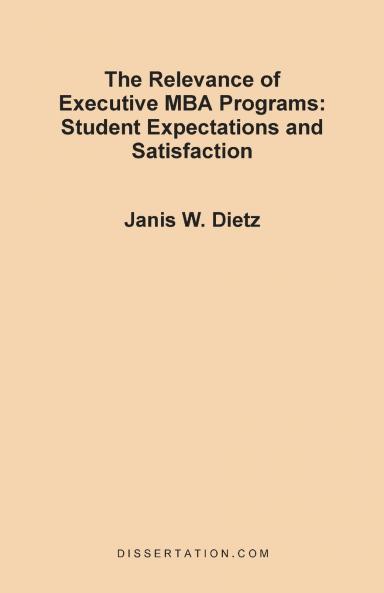
<p>Investment in executive education has grown steadily since its inception during the last century. Several studies have attempted to measure the effectiveness of executive programs; prior research has indicated that some programs lack relevance.</p><p>&nbsp;</p><p>This study addressed the topic from the perspective of corporations whose future executive education decisions are affected by the relevance of current programs and program alumni.</p><p>In a partial replication of a 1959 Harvard study which queried graduates of 39 residential programs I surveyed the 1993-1995 executive MBA graduates of four schools: UCLA University of Colorado University of Utah and University of Washington. The main research question was: Are executive education programs meeting the needs of their mid-career students ?</p><p>In addition to the above the changing workplace prompted the following queries:</p><p>&nbsp;</p><ol> <li>Is there a difference between the satisfaction of the students with the programs in 1959 and now?</li> <li>Are the programs affected by lack of security in the workplace. Are people using the EMBA to change employers?</li> <li>Do sponsoring companies use the skills learned?</li> <li>Do women have a problem with the &#39;glass ceiling&#39;?</li></ol><p>In addition to collecting the surveys I interviewed the four program directors 10 corporate executives whose responsibilities include executive education and 24 of the 157 alumni who returned the questionnaire.</p><p>Frequency distribution correlation analysis and stepwise multiple regression were used to analyze the survey data.</p><p>The major findings were:</p><ol> <li>EMBA students today are satisfied with the relevance of their education;</li> <li>Students are dissatisfied with schools that employ professors with outdated or inadequate teaching skills;</li> <li>Instability in today&#39;s workplace is prompting some people to change jobs or go into their own business once their EMBA is completed;</li> <li>Corporations will continue to invest in these programs but there is more specific succession planning in conjunction with the career path expected for the employee;</li> <li>There continues to be little ethnic diversity in the programs.</li></ol>

Piracy-free

Assured Quality

Secure Transactions

Fast Delivery

Sustainably Printed
Details
ISBN 13
9781581120394
Publication Date
-01-12-1997
Pages
-268
Weight
-319 grams
Dimensions
-140x216x15.38 mm
