





₹1404
₹1792
21.65% OFF
(All inclusive*)
Paperback
Delivery Options
Please enter pincode to check delivery time.
*COD & Shipping Charges may apply on certain items.
Review final details at checkout.
Looking to place a bulk order? SUBMIT DETAILS
Delivery Options
Please enter pincode to check delivery time.
*COD & Shipping Charges may apply on certain items.
Review final details at checkout.
About The Book
Description
Author(s)
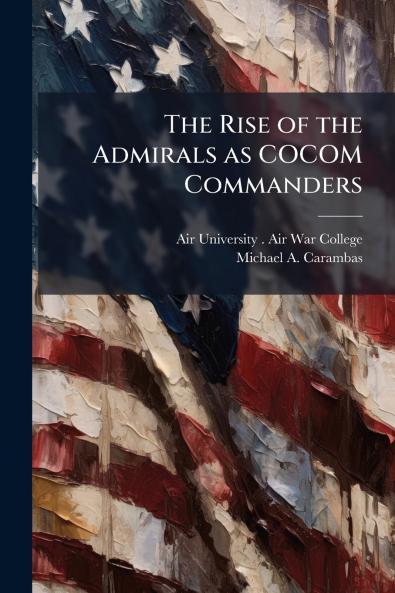
<p>Admiral Eric Olson assumed command of U.S. Special Operations Command (SOCOM) becoming the fourth Navy Admiral to be placed in charge of five warfighting COCOMs: U.S. Central Command (CENTCOM) U.S. Pacific Command (PACOM) and U.S. Southern Command (SOUTHCOM). With these recent appointments the Navy has risen to command a preponderance of senior military leadership positions. Is this coincidence or just the Navy's turn in these leadership positions? Could one possible reason be that the Navy adapted to the current situation and the Bush administration's desire to transform the military better than her sister services? Could the ascendance of these officers' be explained by other reasons based on job experience or other political factors? What can explain the'rise of the Admirals?' Until recently command of regional COCOMs appeared to be determined by either the service that provided the bulk of capability either in peacetime or in recent operations or by the nature of the domain be it primarily maritime land or mixed in nature--with few (explainable) exceptions. But recently this trend has changed. I consider two potential explanations for this. The first is that the services that have been in the forefront of'transformation' the use of information technology to make forces more accurate lighter and faster have been rewarded with leadership positions in the combatant commands where such forces would most likely be utilized. The second explanation is that Navy officers merely happen to be the right man in the right place at the right time for these positions. I find that embracing transformation placed the Navy and the USAF ahead of the Army in contention for COCOM leadership while the personal qualifications placed the Navy ahead of the USAF. Hence the combination of transformation and personal qualifications explains the rise of the Admirals.</p><p>This work has been selected by scholars as being culturally important and is part of the knowledge base of civilization as we know it. This work was reproduced from the original artifact and remains as true to the original work as possible. Therefore you will see the original copyright references library stamps (as most of these works have been housed in our most important libraries around the world) and other notations in the work.</p><p>This work is in the public domain in the United States of America and possibly other nations. Within the United States you may freely copy and distribute this work as no entity (individual or corporate) has a copyright on the body of the work.</p><p>As a reproduction of a historical artifact this work may contain missing or blurred pages poor pictures errant marks etc. Scholars believe and we concur that this work is important enough to be preserved reproduced and made generally available to the public. We appreciate your support of the preservation process and thank you for being an important part of keeping this knowledge alive and relevant.</p><br>

Piracy-free

Assured Quality

Secure Transactions

Fast Delivery

Sustainably Printed
Details
ISBN 13
9781025084619
Publication Date
-22-05-2025
Pages
-58
Weight
-98 grams
Dimensions
-156x234x3.05 mm
