



English



Hardback
₹14113
₹17775
20.6% OFF
(All inclusive*)
Delivery Options
Please enter pincode to check delivery time.
*COD & Shipping Charges may apply on certain items.
Review final details at checkout.
Looking to place a bulk order? SUBMIT DETAILS

Piracy-free

Assured Quality

Secure Transactions
About The Book
Description
Author
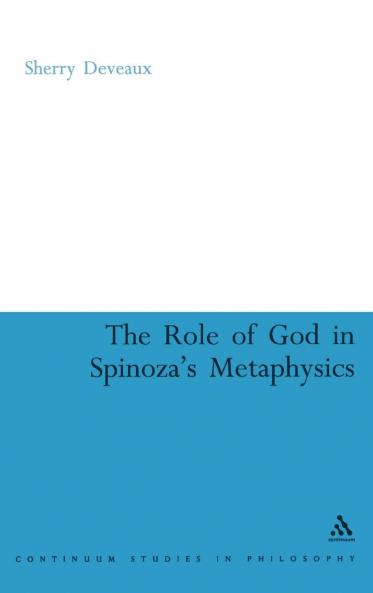
Baruch Spinoza began his studies in the Jewish community of seventeenth century Amsterdam by learning Hebrew and the Talmud only to be excommunicated at the age of twenty-four for supposed heresy. Because of his radical transformation of the concept of God he has been characterized on the one hand as an atheist and on the other as the God-intoxicated man. This book is an exploration of what Spinoza understood God to be; how for him the infinite and eternal power of God is expressed; and how finite human beings can have a true idea of this greatest of all entities. Sherry Deveaux begins with an analytic discussion of these three questions and an explication of three different views held by contemporary commentators on Spinoza. She then shows that the commonly held views about Spinoza are inconsistent with his texts--especially his magnum opus the Ethics. Next she provides analyses of central topics in Spinoza's metaphysics--such as 'power' 'true idea' and 'essence'--that must be understood in order to correctly answer the three questions. Deveaux concludes by arguing (i) that Spinoza defines God's essence as 'absolutely infinite and eternal power' and (ii) that far from identifying God's essence with the divine attributes (such as thought and extension) as commentators commonly suppose Spinoza regards God's essence or power as something that is expressed through the divine attributes.
Piracy-free
Assured Quality
Secure Transactions
Delivery Options
Please enter pincode to check delivery time.
*COD & Shipping Charges may apply on certain items.
Review final details at checkout.
Details
ISBN 13
9780826488886
Publication Date
-26-04-2007
Pages
-154
Weight
-321 grams
Dimensions
-155.96x233.93x9.91 mm
