




This Book is Out of Stock!
English




₹23122
(All inclusive*)
Hardback
Delivery Options
*COD & Shipping Charges may apply on certain items.
Review final details at checkout.
Looking to place a bulk order? SUBMIT DETAILS
*COD & Shipping Charges may apply on certain items.
Review final details at checkout.
₹23122
Out Of Stock
All inclusive*
About The Book
Description
Author
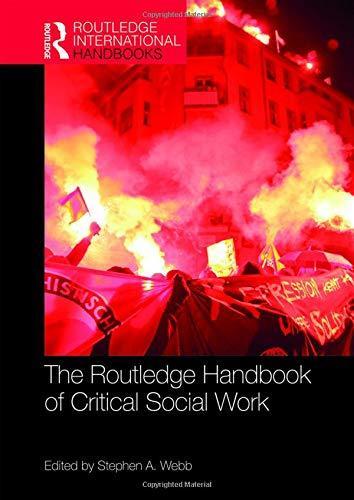
<p><em>The Routledge Handbook of Critical Social Work</em> brings together the world’s leading scholars in the field to provide a cutting-edge overview of classic and current research and future trends in the subject. </p><p>Comprised of 48 chapters divided into six parts: </p><ul> <p> </p> <li>Historical, social, and political influences </li> <p> </p> <li>Mapping the theoretical and conceptual terrain </li> <p> </p> <li>Methods of engagement and modes of analysis </li> <p> </p> <li>Critical contexts for practice and policy </li> <p> </p> <li>Professional education and socialisation </li> <p> </p> <li>Future challenges, directions, and transformations </li> </ul><p>it provides an authoritative guide to theory and method, and the primary debates of today in social work from a critical perspective. </p><p>This handbook is a major reference work and the first book to comprehensively map the wide-ranging territory of critical social work. It does so by addressing its conceptual developments, its methodological advances, its value-based front-line practice and as an influence on the policy field. By offering a definitive survey of current academic knowledge as it relates to professional practice, it provides the first comprehensive, up-to-date, definitive work of reference while at the same time identifying emerging, innovative and cutting-edge areas.</p> <p>List of contributors; Foreword: <i>Critical social work and social justice </i>- Jan Fook; Acknowledgements; Introduction: <i>Critical social work and the politics of transformation - </i>Stephen A. Webb; <b>PART I: Historical, social and political influences; </b>Chapter One <i>Welfare words, neoliberalism and critical social work - </i>Paul Michael Garrett; Chapter Two <i>Neoliberal relations of poverty and the welfare state </i>– Sanford F. Shram; Chapter Three <em>Marxist Social Work: an international and historical perspective </em>– Tom Vickers; Chapter Four <em>Critical social work in the U.S.: challenges and conflicts </em>– Michael Reisch; Chapter Five <i>The rise of the global state paradigm: implications for social work </i>– Paul Stepney; <b>PART II: Mapping the theoretical and conceptual terrain; </b>Chapter Six <i>Critical theory and critical social work </i>– Edward Granter; Chapter Seven <em>Reimagining social theory for social work </em>– Christopher Thorpe; Chapter Eight <em>Anarchism and social work </em>– Mark Baldwin; Chapter Nine <em>Relational constructivism and relational social work </em>– Björn Kraus; Chapter Ten <i>Extending Bourdieu for critical social work </i>– Stan Houston; Chapter Eleven <i>Why psychosocial thinking is critical </i>– Liz Frost; Chapter Twelve <em>Feminist contributions to critical social work </em>–<em> </em>Viviene E. Cree and Ruth Philips; Chapter Thirteen <em>The politics of Michel Foucault </em>– Paul Michael Garrett; Chapter Fourteen <em>Resistance, biopolitics and radical passivity </em>–<em> </em>Stephen A. Webb; <b>PART III: Methods of engagement and modes of analysis; </b>Chapter Fifteen <em>Critical race theory and social work </em>– Monique Constance-Huggins; Chapter Sixteen <em>Indigenous peoples and communities: a critical theory perspective </em>– Brent Angell; Chapter Seventeen <i>Postcolonial feminist social work </i>– Anne C. Deepak; Chapter Eighteen <i>Critical discourse analysis and social work </i>– Karen D. Roscoe; Chapter Nineteen <i>Controversy analysis: contributions to the radical agenda </i>– Natalia Farmer; Chapter Twenty <em>Narrative analysis and critical social work </em>– Sam Larsson; <b>PART IV: Critical contexts for practice and policy; </b>Chapter Twenty-One <em>Green social work and political ecologies </em>– Lena Dominelli; Chapter Twenty-Two <i>Securitising social work: counter terrorism, extremism, and radicalisation </i>– Jo Finch and David McKendrick; Chapter Twenty-Three <i>Issues of ageing, social class, and poverty </i>– Malcolm Carey; Chapter Twenty-Four <i>Critical social work in the new urban age </i>– Charlotte Williams; Chapter Twenty-Five <em>Parents organizing a grassroots movement to reform child welfare </em>–<em> </em>David Tobis; Chapter Twenty-Six <i>Incorporating rurality into a critical ethics of intellectual disability care </i>– Lia Bryant and Bridget Garnham; Chapter Twenty-Seven <em>Neoliberal regimes of welfare in Scandinavia </em>– Edgar Marthinsen; Chapter Twenty-Eight <i>Performativity and sociomaterial becoming: what technologies do </i>– Lucas D. Introna<b>; </b>Chapter Twenty-Nine <em>Challenging scapegoating mechanisms: mimetic desire and self-directed groupwork </em>–<em> </em>Stan Houston and Stephen Coulter; Chapter Thirty <em>Vulnerability and the myth of autonomy </em>– Ian Cummins; Chapter Thirty-One <em>Food banks, austerity and critical social work </em>– Sarah Pollock; Chapter Thirty-Two <em>Ageing, veterans and offending: challenges for critical social work </em>– Paul Taylor and Jason Powel; Chapter Thirty-Three <em>"Do you really want this in front of a judge?" Translation and reversibility in practices of age assessment </em>– Calum Lindsey; Chapter Thirty-Four <i>Toward a multispecies home: bedbugs and the politics of non-human relations </i>– Heather Lynch; Chapter Thirty-Five <em>Adoption, child rescue, maltreatment and poverty </em>–<em> </em>June Thoburn and Brigid Featherstone; Chapter Thirty-Six <i>Critical debates in child protection: the production of risk in changing times </i>– Emily Keddell and Tony Stanley; Chapter Thirty-Seven <em>LGBT issues and critical social work </em>– Urban Nothdurfter; <strong>PART V: Professional education and socialisation; </strong>Chapter Thirty-Eight <i>Promoting activism and critical social work education </i>– Christine Morley; Chapter Thirty-Nine <i>Social work education and the challenge of neoliberal hegemony </i>– Jane Fenton; Chapter Forty <i>Embedding critical reflection across the curriculum </i>– Fiona Gardner; Chapter Forty-One <i>Contesting doxa in social work education </i>– Liz Beddoe; Chapter Forty-Two <em>Insinuating: understanding approaches to critical practice </em>– Cynthia J. Gallop; Chapter Forty-Three <em>Responding to neoliberalism in social work education: A neo-Gramscian approach </em>– John Wallace and Bob Pease; <b>PART VI: Future challenges, directions and transformations; </b>Chapter Forty-Four <i>Reprioritising social work practice: towards a reconnection of the personal and the social </i>– Peter Beresford and Suzy Croft; Chapter Forty-Five <i>Responding to political polarization: the new social work radicalism </i>– Iain Ferguson; Chapter Forty-Six <em>Popular social work </em>– Michael Lavalette; Chapter Forty-Seven <em>Challenging harmful political contexts through activism </em>–<em> </em>Linda Briskman; Chapter Forty-Eight <em>Imperialism, colonialism and a Marxist epistemology of 'critical peace' </em>– Vasilios Ioakimidis and Nicos Trimikliniotis; Index</p>

Piracy-free

Assured Quality

Secure Transactions

Fast Delivery

Sustainably Printed
Details
ISBN 13
9781138578432
Publication Date
-30-01-2019
Pages
-654
Weight
-1180 grams
Dimensions
-174x246x35.6 mm
