



This Book is Out of Stock!
English



Hardback
₹23155
(All inclusive*)
Delivery Options
*COD & Shipping Charges may apply on certain items.
Review final details at checkout.
Looking to place a bulk order? SUBMIT DETAILS

Piracy-free

Assured Quality

Secure Transactions
About The Book
Description
Author
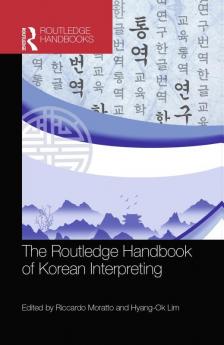
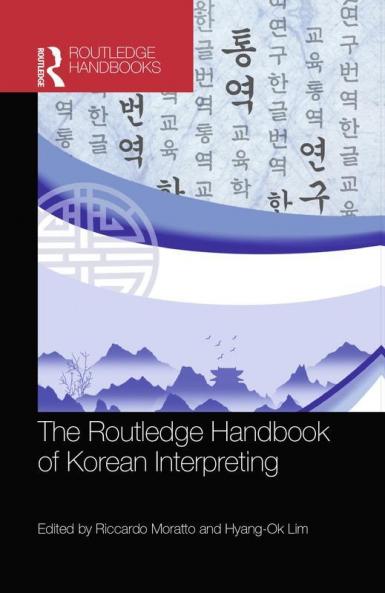
<p>Professor Riccardo Moratto and Professor Hyang-Ok Lim bring together the most authoritative voices on Korean interpreting.</p><p>The first graduate school of interpretation and translation was established in 1979 in South Korea. Since then, not only has the interpretation and translation market grown exponentially, but so too has research in translation studies. Though the major portion of research focuses on translation, interpretation has not only managed to hold its own, but interpretation studies in Korea have been a pioneer in this field in Asia. This handbook highlights the main interpretation research trends in South Korea today, including case studies of remote interpreting during the Covid-19 pandemic, Korean interpreting for conferences, events, and diplomacy, and research into educating interpreters effectively. </p><p>An essential resource for researchers in Korean interpreting, this handbook will also be very valuable to those working with other East Asian languages.</p> <p><strong>Introduction. A HISTORICAL PERSPECTIVE</strong> 1. From Whence Do We Come? A Panoramic View of Interpretation in Korea with a Focus on Educational Institutions<b> </b>2. A Study on the Activities of Interpreters and Translators in Politics, Diplomacy, and Society of the Goryeo and Joseon Dynasties<b> </b>3. History of Interpreting in the Joseon Dynasty: Six Selected Interpreting Officials<i> </i>4. In Search of Interpreters on the Demarcation Line<b> </b>5. Interpreters Portrayed in Korean News Media (1948-2022)<b> </b>6. Theoretical Constituents of Interpreting Research in Korea: A Meta-Analysis of Research Publications from 1998-2022<b><i> </i>EDUCATION<i> </i></b>7. What’s Next? The Status Quo and Challenges of Undergraduate Interpretation and Translation Education in Korea<b><i> </i></b>8. Redesigning the Learning Experience for the Consecutive Interpreting Classroom<b><i> </i></b>9. Flipped Learning in the Undergraduate Interpretation and Translation Classroom<b><i> </i></b>10. The Use of Interpreting Textbooks: A Survey Study<b><i> </i></b>11. An Analysis of Conference Interpreting Practices for Effective Pedagogy: Considerations for Simultaneous Interpretation between Korean and French<b><i> </i></b>12. The Present and Future of Korean MTI Education in China: A Case of Guangdong University of Foreign Studies<b><i> </i></b>13. Let them Talk: Rethinking Learners’ Roles in Interpreting Performance Assessment<b><i> </i></b>14. A Case Study on Student Interpreters’ Self-assessment in Interpreting Training<b><i> </i></b>15. A Systemic Functional Linguistic Analysis of the Consecutive Interpretation of Bong’s Oscar Award speech<b><i> </i>COMMUNITY INTERPRETING<i> </i></b>16. Healthcare Interpreting for Korean Immigrants in Australia: Linguistic and Cultural Perspectives<b><i> </i></b>17. Australian Healthcare Interpreters’ Perceptions of the Challenges in Intercultural Communication<b><i> </i></b>18. Analyzing the Motivations for Self-repairs among Russian Police Interpreters in South Korea<b><i> </i></b>19. A Study on the Status of Interpretation for Arab Refugees in South Korea and Interpretation Improvement<b><i> </i></b>20. On Training Sermon Interpreters: With Reference to Interviews with Sermon Interpreters and Surveys on User-expectations<b><i> </i></b>21. Unwritten Rules and Indispensable Tools: Cultural Aspects of Korean Interpreting 22. Korean Court Interpreting in the U.S.: History, Obstacles and Advanced Techniques 23. A Study of Interpreters' Speech Acts Based on a Corpus of Chinese-Korean Diplomatic Interpreting <b>OPPORTUNITIES FOR THE FUTURE<i> </i></b>24. Research on Interpreters’ and Translators’ Cognition in Korea<b><i> </i></b>25. Exploring the Possibility of Using Speech-to-Text Transcription as a Tool for Interpretation<b><i> </i></b>26. Market Demand for Professional Interpreting Services in South Korea 27 A Study of Technological Competence for Remote Interpreting and Current Status of Competence among Korea’s Interpreters<b><i> </i></b>28. Remote Interpreting during COVID-19: A Case Study of an In-house Interpreter in Korea<b><i> </i></b>29. Evaluation of Korean Chinese Automatic Interpretation Quality</p>
Piracy-free
Assured Quality
Secure Transactions
*COD & Shipping Charges may apply on certain items.
Review final details at checkout.
₹23155
Out Of Stock
All inclusive*
Details
ISBN 13
9781032394374
Publication Date
-23-10-2023
Pages
-518
Weight
-962 grams
Dimensions
-174x246x28.61 mm
