



This Book is Out of Stock!
English




Hardback
₹23122
(All inclusive*)
Delivery Options
*COD & Shipping Charges may apply on certain items.
Review final details at checkout.
Looking to place a bulk order? SUBMIT DETAILS

Piracy-free

Assured Quality

Secure Transactions
About The Book
Description
Author(s)
Shoutouts
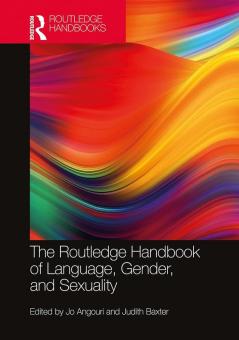
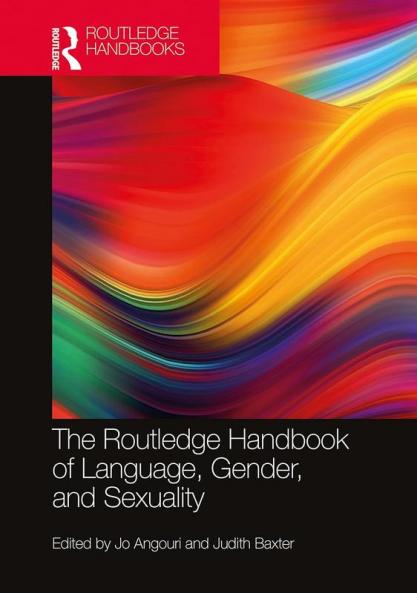
<p><b>S</b><b>hortlisted for BAAL (British Association for Applied Linguistics) Book Prize 2022</b></p><p><i>The Routledge Handbook of Language, Gender, and Sexuality</i> provides an accessible and authoritative overview of this dynamic and growing area of research. Covering cutting-edge debates in eight parts, it is designed as a series of mini edited collections, enabling the reader, and particularly the novice reader, to discover new ways of approaching language, gender, and sexuality.</p><p>With a distinctive focus both on methodologies and theoretical frameworks, the <em>Handbook</em> includes 40 state-of-the art chapters from international authorities. Each chapter provides a concise and critical discussion of a methodological approach, an empirical study to model the approach, a discussion of real-world applications, and further reading. Each section also contains a chapter by leading scholars in that area, positioning, through their own work and chapters in their part, current state-of-the-art and future directions.</p><p>This volume is key reading for all engaged in the study and research of language, gender, and sexuality within English language, sociolinguistics, discourse studies, applied linguistics, and gender studies.</p> <p><em>List of Figures </em></p><p><em>List of Tables</em></p><p><em>List of Contributors</em></p><p><em>Acknowledgements</em></p><p><em>Foreword</em></p><p>1 Introduction: Language, gender, and sexuality; sketching out the field</p><p>Part 1: Variationist approaches</p><p>2 Non-binary approaches to gender and sexuality </p><p>3 Sexuality as non-binary: A variationist perspective </p><p>4 Perception of gender and sexuality</p><p>5 Gender diversity and the voice</p><p>Part 2: Anthropological and Ethnographic approaches</p><p>6 Ethnography and the shifting semiotics of gender and sexuality</p><p>7 Gender, language, and elite ethnographies in UK political institutions</p><p>8 ‘Gay, aren't they?' An ethnographic approach to compulsory heterosexuality</p><p>9 Anthropological discourse analysis and the social ordering of gender ideology</p><p>10 Using Communities of Practice and ethnography to answer sociolinguistic questions</p><p>11 Digital ethnography in the study of language, gender, and sexuality</p><p>Part 3: Interactional Sociolinguistic approaches</p><p>12 Interactional Sociolinguistics: Foundations, developments, and applications to Language, Gender, and Sexuality</p><p>13 Leadership and humour at work: Using interactional sociolinguistics to explore the role of gender</p><p>14 More than builders in pink shirts: Identity construction in gendered workplaces</p><p>15 Interactional Sociolinguistics in language and sexuality research: Benefits and challenges</p><p>Part 4: Ethnomethodological and Conversation Analytic approaches</p><p>16 The accomplishment of gender in interaction: Ethnomethodological and conversation analytic approaches to gender</p><p>17 Feminist Conversation Analysis: Examining violence against women</p><p>18 Performance in action: Walking as gendered construction practice in Drag King workshops</p><p>19 Gender and sexuality normativities: Using Conversation Analysis to investigate heteronormativity and cisnormativity in interaction</p><p>20 Examining girls’ peer culture-in-action: Gender, stance, and category work in girls’ peer language practices</p><p>Section 5: Sociocultural and Critical approaches</p><p>21 Language, Gender, and Sexuality: reflections on the field’s ongoing critical engagement with the sociopolitical landscape</p><p>22 Applying queer theory to language, gender, and sexuality research in schools</p><p>23 Text trajectories and gendered inequalities in institutions</p><p>24 ‘I thought you didn’t accept gay marriage Fr’: Combining Corpus Linguistics and Critical Discourse Analysis to investigate the representation of gay marriage and the Irish Mammy stereotype in <em>Mrs Brown's Boys</em></p><p>25 The impact of language and gender studies: public engagement and wider communication</p><p>Part 6: Poststructuralist approaches</p><p>26 Poststructuralist research on language, gender, and sexuality</p><p>27 Analysing gendered discourses online: Child-centric motherhood and individuality in Mumsnet Talk</p><p>28 Leadership language of Middle Eastern women: Using Feminist Poststructuralist Discourse Analysis to study women leaders in Bahrain</p><p>29 Feminist poststructuralism: discourse, subjectivity, the body, and power: the case of the Burkini</p><p>30 Affect in language, gender, and sexuality research: studying heterosexual desire</p><p>31 Language, gender, and the discursive production of women as leaders</p><p>Part 7: Semiotic and Multimodal approaches</p><p>32 Gender and sexuality in discourse: Semiotic and multimodal approaches</p><p>33 Multimodal constructions of feminism: The transfiguration of Chimamanda Ngozi Adichie in <i>Vogue</i></p><p>34 Judged and condemned: Semiotic representations of women criminals </p><p>35 Confident appearing: Revisiting <em>Gender Advertisements</em> in contemporary culture </p><p>36 Doing gender and sexuality intersectionally in multimodal social media practices</p><p>Part 8: Corpus Linguistic approaches</p><p>37 Lovely nurses, rude receptionists, and patronising doctors: determining the impact of gender stereotyping on patient feedback</p><p>38 Investigating gendered language through collocation: The case of mock politeness</p><p>39 The South African news media and representations of sexuality</p><p>40 Women victims of men who murder: XML mark-up for nomination, collocation, and frequency analysis of language of the law</p><p>Index</p>
Piracy-free
Assured Quality
Secure Transactions
*COD & Shipping Charges may apply on certain items.
Review final details at checkout.
₹23122
Out Of Stock
All inclusive*
Details
ISBN 13
9781138200265
Publication Date
-27-04-2021
Pages
-650
Weight
-1174 grams
Dimensions
-174x246x35.39 mm
Imprint
-TAYLOR AND FRANCIS GROUP LIMITED
