



This Book is Out of Stock!
English




Hardback
₹17969
₹25478
29.47% OFF
(All inclusive*)
Delivery Options
*COD & Shipping Charges may apply on certain items.
Review final details at checkout.
Looking to place a bulk order? SUBMIT DETAILS

Piracy-free

Assured Quality

Secure Transactions
About The Book
Description
Author(s)
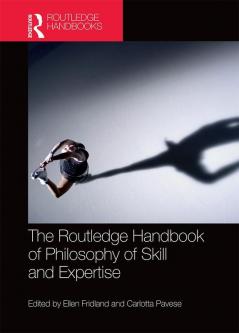
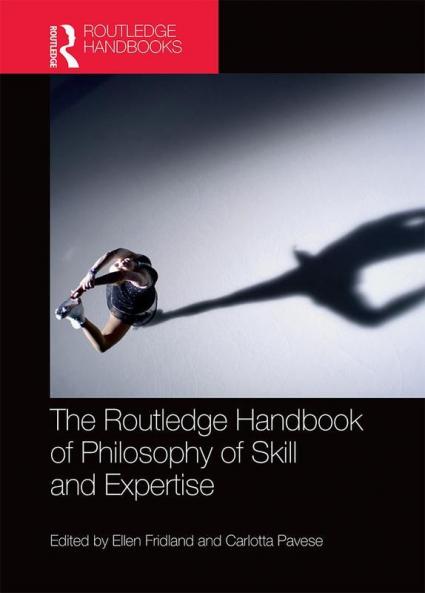
<p>Philosophical questions surrounding skill and expertise can be traced back as far as Ancient Greece, China, and India. In the twentieth century, skilled action was an important factor in the work of phenomenologists such as Heidegger and Merleau-Ponty and analytic philosophers including Gilbert Ryle. However, as a subject in its own right it has, until now, remained largely in the background.<br><br><i>The Routledge Handbook of Philosophy of Skill and Expertise </i>is an outstanding reference source and the first major collection of its kind, reflecting the explosion of interest in the topic in recent years. Comprising thirty-nine chapters written by leading international contributors, the <em>Handbook</em> is organized into six clear parts:<br><br>• Skill in the history of philosophy (East and West) <br>• Skill in epistemology<br>• Skill, intelligence, and agency<br>• Skill in perception, imagination, and emotion<br>• Skill, language, and social cognition<br>• Skill and expertise in normative philosophy. <br><br>Essential reading for students and researchers in philosophy of mind and psychology, epistemology, and ethics, <i>The Routledge Handbook of Philosophy of Skill and Expertise </i>is also suitable for those in related disciplines such as social psychology and cognitive science. It is also relevant to those who are interested in conceptual issues underlying skill and expertise in fields such as sport, the performing arts, and medicine.</p> <p>Introduction <i>Ellen Fridland and Carlotta Pavese </i><b>Part I: Skill in the History of Philosophy (East and West) </b>1. Skill and Virtuosity in Buddhist and Daoist Philosophy <i>Jay L Garfield and Graham Priest </i>2. Skill and Expertise in Three Schools of Classical Chinese Thought<i> Hagop Sarkissian </i>3. Volition, Action, and Skill in Indian Buddhist Philosophy <i>Matthew MacKenzie </i>4. <em>Technē </em>in the Platonic Dialogues <i>Tom Angier </i>5. Technê in Aristotle’s taxonomy of knowledge <i>Thomas K. Johansen </i>6. Mendelssohn and Kant on Virtue as a Skill<b><i> </i></b>Melissa Merritt 7. Gilbert Ryle on Skill as Knowledge-How <i>Michael Kremer </i>8. Anscombe on Action and Practical Knowledge<b> </b><i>Will Small </i>9. Hubert Dreyfus on Practical and Embodied Intelligence <i>Kristina Gehrman and John Schwenkler </i><b>Part II: Skill in Epistemology </b>10. Knowledge, Skill, and Virtue Epistemology <i>Duncan Pritchard<strong> </strong></i>11. Skill and Knowledge <i>Ernest Sosa and Laura Frances Callahan </i>12. Know-How and Skill: The Puzzles of Priority and Equivalence <i>Yuri Cath </i>13. Knowledge as Skill <i>Stephen Hetherington </i><b>Part III: Skill, intelligence, and agency </b>14. Consciousness and Skill <i>Barbara Montero </i>15. Embodied Experience in the Cognitive Ecologies of Skilled Performance <i>John Sutton and Kath Bicknell </i>16. Automaticity, Control, and Attention in Skill <i>Wayne Wu </i>17.<i> </i>Automatizing Knowledge: Confusion Over What Cognitive Neuroscience Tells Us about Intellectualism <i>John W. Krakauer </i>18. Practical Representation <i>Carlotta Pavese </i>19. The Nature of Skill: Functions and Control Structures <i>Ellen Fridland </i>20. The Intelligence of Motor Control <i>Myrto Mylopolous </i>21. The Targets of Skill, and their Importance <i>Joshua Shepherd </i><b>Part IV: Skill in Perception, Imagination, and Emotion </b>22. Embodying Expertise as a Performer and Perceiver: Insights from the Arts and Robotics <i>Emily S. Cross</i> 23. Motor Representation and Knowledge of Skilled Action <i>Corrado Sinigaglia and Stephen A. Butterfill </i>24. Skill and Expertise in Perception <i>Susanna Siegel </i>25. Perceptual Skills <i>Dustin Stokes and Bence Nanay </i>26. Skill, Visual Prejudice, and Know-How <i>Keota Fields </i>27. The Skill of Imagination <i>Amy Kind </i>28. Emotion Recognition as a Social Skill <i>Gen Eickers and Jesse Prinz </i><b>Part V: Skill, Language, and Social Cognition </b>29. Skill and Expertise in Joint Action <i>James Strachan, Gunther Knoblich, and Natalie Sebanz </i>30. Self- and Other-Awareness in Join Expert Performance <i>Shaun Gallagher and Jesús Ilundáin-Agurruza </i>31. The Evolution of Skilled Imitative learning: A Social Attention Hypothesis <i>Antonella Tramacere and Richard Moore </i>32. Semantic Competence <i>Diego Marconi </i>33. Pragmatic Competence <i>Filippo Domaneschi and Valentina Bambini </i><b>Part VI: Skill and Expertise in Normative Philosophy </b>34. Moral Expertise <i>Julia Driver </i>35. A Theory of Political Expertise <i>Alexander A. Guerrero </i>36. Skills of Justice <i>Paul Bloomfield </i>37. Why Moral Philosophers Are Not the Most Virtuous People <i>Bana Bashour </i>38. Virtue as a skill: Self-Regulation and Social Psychology <i>Matt Stichter </i>39. De-biasing, Skill, and Intergroup Virtue <i>Michael Brownstein.</i></p>
Piracy-free
Assured Quality
Secure Transactions
*COD & Shipping Charges may apply on certain items.
Review final details at checkout.
₹17969
₹25478
29% OFF
Hardback
Out Of Stock
All inclusive*
Details
ISBN 13
9781138744776
Publication Date
-21-08-2020
Pages
-542
Weight
-1000 grams
Dimensions
-174x246x29.85 mm
