



This Book is Out of Stock!





₹23155
(All inclusive*)
Hardback
Delivery Options
*COD & Shipping Charges may apply on certain items.
Review final details at checkout.
Looking to place a bulk order? SUBMIT DETAILS
*COD & Shipping Charges may apply on certain items.
Review final details at checkout.
₹23155
Out Of Stock
All inclusive*
About The Book
Description
Author
Shoutouts
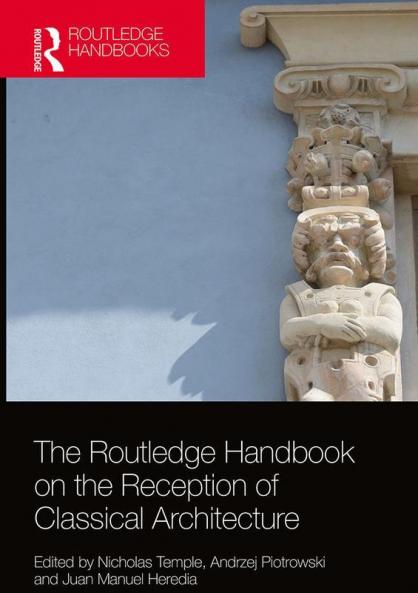
<p>This is the first comprehensive study of the reception of classical architecture in different regions of the world. Exploring the impact of colonialism, trade, slavery, religious missions, political ideology and intellectual/artistic exchange, the authors demonstrate how classical principles and ideas were disseminated and received across the globe. By addressing a number of contentious or unresolved issues highlighted in some historical surveys of architecture, the chapters presented in this volume question long-held assumptions about the notion of a universally accepted ‘classical tradition’ and its broadly Euro-centric perspective. </p><p>Featuring thirty-two chapters written by international scholars from China, Europe, Turkey, North America, Mexico, Australia and New Zealand, the book is divided into four sections: 1) Transmission and re-conceptualisation of classical architecture; 2) Classical influence through colonialism, political ideology and religious conversion; 3) Historiographical surveys of geographical regions; and 4) Visual and textual discourses. This fourfold arrangement of chapters provides a coherent structure to accommodate different perspectives of classical reception across the world, and their geographical, ethnographic, ideological, symbolic, social and cultural contexts. Essays cover a wide geography and include studies in Italy, France, England, Scotland, the Nordic countries, Greece, Austria, Portugal, Romania, Germany, Poland, India, Singapore, China, the USA, Mexico, Brazil, New Zealand and Australia. Other essays in the volume focus on thematic issues or topics pertaining to classical architecture, such as ornament, spolia, humanism, nature, moderation, decorum, heresy and taste. </p><p>An essential reference guide, <i>The Routledge Handbook on the Reception of Classical Architecture</i> makes a major contribution to the study of architectural history in a new global context.</p> <p>1. Introduction: A ‘World’ Reception of Classical Architecture <em>Nicholas Temple, Andrzej Piotrowski and Juan Manuel Heredia </em> <strong>PART I: TRANSMISSION AND RE-CONCEPTUALISATION OF CLASSICAL ARCHITECTURE </strong>2.<strong> </strong>The Fates of Fornix <em>Juan Manuel Heredia</em> 3. Architects, Architecture and the City: Some Themes on the Continuity of Classical Ideas Relating to the Latin Middle Ages <em>Christian Frost</em> 4. Rethinking Ornament in Classical Architecture: Spolia and Architecture as <em>institutio Clare E. L. Guest </em>5. The Persistence of <i>Natura Naturans</i> from Classical Architecture<em> John Hendrix</em> 6. On Moderation: The Ancient Virtue and its Reception in Architectural Theory <em>Esra Sahin Burat</em> 7. Classical Columns, Mannerism, and the Other Antiquity <em>Andrzej Piotrowski</em> 8. Neoclassical Taste and Antiquarian Scholarship: The Royal Academy of the Three Noble Arts of San Carlos in Mexico, Alexander von Humboldt and Pedro José Márquez <em>Oscar Humberto Flores</em> 9. Eighteenth and Nineteenth Century Classicism in England: John Soane’s Language and Imagination <em>Yue Zhuang </em><b>PART II: CLASSICAL INFLUENCES THROUGH COLONIALISM, POLITICAL IDEOLOGY AND RELIGIOUS CONVERSION </b>10. Honour and the Classical Tradition in Architecture: The Matter of Slavery <em>Charles Burroughs</em> 11. Dismemberment of the Orders and their Reassembly across Portuguese Overseas Settlements <em>Pedro Guedes </em>12. The Reception and Involution of Classical Architecture in Jesuit Missions in China (1583-1759) <em>Xiao Jing </em>13. The Gods that came from the Sea: The Classical Tradition in New Spain <em>Santiago de Orduña </em>14. Indo-Portuguese Architecture in Kerala during the Sixteenth and Seventeenth Centuries <em>Helder Carita</em> 15. Neo-classical Architecture in the Straits Settlements: Singapore’s Civic Square (1819-1936) <em>Raymond Quek </em>16. Herbert Baker, New Delhi and the Reception of the Classical Tradition <em>Soumyen Bandyopadhyay and Sagar Chauhan</em> <b>PART III: HISTORIOGRAPHICAL SURVEYS OF GEOGRAPHICAL REGIONS </b>17. Scotland’s Enduring Eclectic Classicism <em>Ian Campbell </em>18. From Fischer von Erlach to Adolf Loos: The Classical in Austria<em> Ross Jenner </em>19. Avatars of the Classical Tradition in Romanian Architecture <em>Ana Maria Zahariade and Horia Moldovan </em>20. China (Sixteenth to Eighteenth Centuries): Renaissance Humanism and Chinese Architecture <em>Hui Zou </em>21. Revising the Classical in Australian Architecture: Colonial New South Wales and Victoria <em>Peter Kohane and Mark Stiles </em>22. "Pretty true reflection of our civilisation": Classical Architecture in Nineteenth Century New Zealand <em>Robin Skinner</em> 23. Nordic Visions of a Classical World (1901-1966) <em>Harry Charrington </em><b>PART IV: VISUAL AND TEXTUAL DISCOURSES </b>24. (Re)Invoking Humanism in Modernity: Architecture and Spectacle in Fascist Italy <em>Nicholas Temple and Eleni Tracada </em>25. Unclassical Forms of Late Roman Architecture and the Roman Baroque: Francesco Borromini and the New Classical Tradition <em>Giuseppe Bonaccorso </em>26. Power, Patronage and Politics: Giovanni Niccolò Servandoni and the Reception of Neoclassicism in France <em>Louise Pelletier </em>27. The Reception of European Renaissance Urban Theory in New Spain <em>Juan Luis Burke </em>28. Thomas Jefferson: The American Landscape and the Architecture <em>Carol William Westfall </em>29. The Revival of Classical Architecture in Athens (1830-1860): Educational Institutions in Athens by Christian Hansen, Lysandros Kaftantzoglou and Stamatios Kleanthis <em>Nikolaos Karydis </em>30. Modernism and Classicism in Brazil: Foundational Myths and Other Stories <em>Daniela Sandler </em>31. Greek Temple Design and the <em>Kathedrale des erotishen Elends Matthew Mindrup</em> 32. The Underbelly of the Architect: Reproducing Classical Idioms of Power and Culture in Rome <em>Renée Tobe and Tracey Eve Winton </em>Selected Bibliography Index</p>

Piracy-free

Assured Quality

Secure Transactions

Fast Delivery

Sustainably Printed
Details
ISBN 13
9781138047112
Publication Date
-13-07-2022
Pages
-584
Weight
-1068 grams
Dimensions
-174x246x32 mm
