



This Book is Out of Stock!
English



₹24208
(All inclusive*)
Hardback
Delivery Options
*COD & Shipping Charges may apply on certain items.
Review final details at checkout.
Looking to place a bulk order? SUBMIT DETAILS
*COD & Shipping Charges may apply on certain items.
Review final details at checkout.
₹24208
Out Of Stock
All inclusive*
About The Book
Description
Author
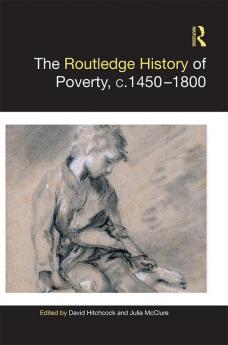
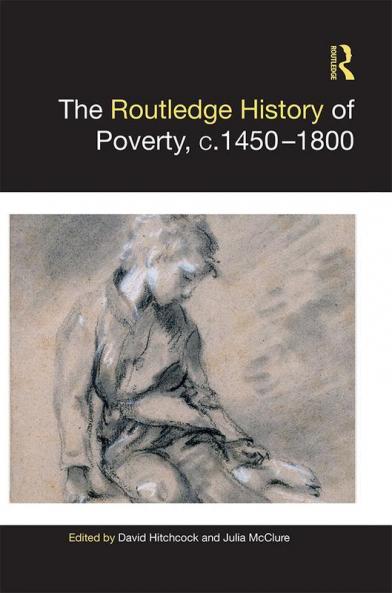
<p><em>The Routledge History of Poverty, c.1450</em>–<em>1800</em> is a pioneering exploration of both the lives of the very poorest during the early modern period, and of the vast edifices of compassion and coercion erected around them by individuals, institutions, and states. </p><p>The essays chart critical new directions in poverty scholarship and connect poverty to the environment, debt and downward social mobility, material culture, empires, informal economies, disability, veterancy, and more. The volume contributes to the understanding of societal transformations across the early modern period, and places poverty and the poor at the centre of these transformations. It also argues for a wider definition of poverty in history which accounts for much more than economic and social circumstance and provides both analytically critical overviews and detailed case studies. </p><p>By exploring poverty and the poor across early modern Europe, this study is essential reading for students and researchers of early modern society, economic history, state formation and empire, cultural representation, and mobility. </p> <p><strong>Part I: Structures </strong>1. The regulation of charity and the rise of the state 2. The economic history of poverty, 1450–1800 3. Poverty and empire 4. The vagrant poor 5. Poverty and environment in early modern England <b>Part II: Impacts </b>6. Losing wealth: debt and downward mobility in eighteenth-century England 7. Poor bodies and disease 8. Motives of control/motifs of creativity: the visual imagery of poverty in early modern Europe 9. The worthiest to be relieved: disabled veterans in England, c. 1580–1630 10. Consumption and material culture of poverty in early-modern Europe, c1450–1800 <strong>Part III: Institutions </strong>11. Institutional care for the sick and aged poor in later medieval England 12. Poverty and the workhouse 13. Relief for the body, comfort for the soul: the case of Portuguese <em>Misericórdias</em> 14. Architecture in relief: hospitals for the poor in Venice and Lisbon <b>Part IV: Connections </b>15. Peddling and the makeshift economy 16. Poverty, law and labour in the Ottoman Empire 17. Spas for the sick poor in the early modern British Atlantic world 18. Barefoot children in a ‘fine room’: Robert Owen, Adam Smith, and social regeneration in Scotland</p>

Piracy-free

Assured Quality

Secure Transactions

Fast Delivery

Sustainably Printed
Details
ISBN 13
9781138555006
Publication Date
-13-07-2022
Pages
-408
Weight
-785 grams
Dimensions
-174x246x22.96 mm
