




This Book is Out of Stock!
English





Hardback
₹22596
(All inclusive*)
Delivery Options
*COD & Shipping Charges may apply on certain items.
Review final details at checkout.
Looking to place a bulk order? SUBMIT DETAILS

Piracy-free

Assured Quality

Secure Transactions
About The Book
Description
Author(s)
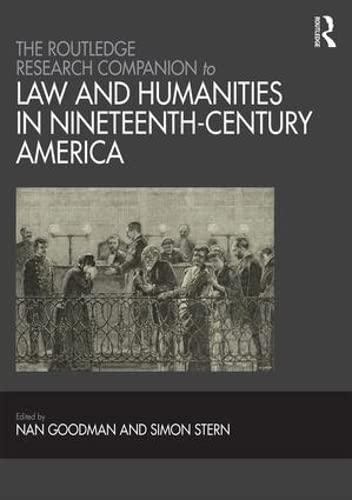
<p>Nineteenth-century America witnessed some of the most important and fruitful areas of intersection between the law and humanities, as people began to realize that the law, formerly confined to courts and lawyers, might also find expression in a variety of ostensibly non-legal areas such as painting, poetry, fiction, and sculpture. Bringing together leading researchers from law schools and humanities departments, this Companion touches on regulatory, statutory, and common law in nineteenth-century America and encompasses judges, lawyers, legislators, litigants, and the institutions they inhabited (courts, firms, prisons). It will serve as a reference for specific information on a variety of law- and humanities-related topics as well as a guide to understanding how the two disciplines developed in tandem in the long nineteenth century.</p> <p>CONTENTS</p><p>List of Figures</p><p>Notes on Contributors</p><p>Preface</p><p>Part I: Human Kinds</p><p>Introduction</p><p>Nan Goodman and Simon Stern</p><p>1. Women: Politics, Culture, and the Law </p><p><i>Joyce W. Warren</i></p><p>2. "The Very Idea of a Slave is a Human Being in Bondage"</p><p><i>Jeannine Marie DeLombard</i></p><p>3. The Corporation and the Transformation of American Culture</p><p><i>Aaron Ritzenberg</i></p><p>4. Deviance in Nineteenth-Century American Law and Culture</p><p><i>Tal Kastner</i></p><p>5. Comparative Racialization and American Indian Identity in Nineteenth-Century America</p><p><i>Cheryl Suzack</i></p><p>6. The Legal Person: Tracing the History of a Forensic Fiction</p><p><i>Susanna L. Blumenthal</i></p><p>Part II: A New Archive</p><p>Introduction</p><p>Nan Goodman and Simon Stern</p><p>7. Law in Nineteenth-Century American Periodicals</p><p><i>Michael H. Hoeflich</i></p><p>8. Spectacular Judgments: Law and Disorder in the Nineteenth-Century</p><p>Visual Imagination</p><p><i>Jon Blandford</i></p><p>9. Legal Language: Expansion, Consolidation, Resistance</p><p><i>Robert L. Tsai</i></p><p>10. The Impersonation of Justice: Lynching, Dueling, and </p><p>Wildcat Strikes in Nineteenth Century America</p><p><i>Norman W. Spaulding</i></p><p>11. The Somers Mutiny and the American Ship of State</p><p><i>Robert A. Ferguson</i></p><p>Part III: Managing the Human</p><p>Introduction</p><p>Nan Goodman and Simon Stern</p><p>12. The Emergence of a Right to Privacy</p><p><i>Milette Shamir</i></p><p>13. The Science of Identity</p><p><i>Simon A. Cole</i></p><p>14. The American Prison, 1786-1860</p><p><i>John Cyril Barton</i></p><p>15. How Meetings Won the West</p><p><i>Andrea McDowell</i></p><p>16. A Gatekeeping Nation: Asian Invasion and the Rise of Xenophobic </p><p>Immigration Law</p><p><i>Edlie Wong</i></p><p>17. Fictions of Race and Personality: Nineteenth-Century Law and </p><p>Mark Twain’s Pudd’nhead Wilson</p><p><i>Trinyan Mariano</i></p><p>Part IV: Affective Relations</p><p>Introduction</p><p>Nan Goodman and Simon Stern</p><p>18. Civic Capacity and Participatory Citizenship in the Nineteenth Century</p><p>United States</p><p><i>Yvonne Pitts</i></p><p>19. "Vital Tissues of the Spirit": Constitutional Emotions in the Antebellum United </p><p>States</p><p><i>Doni Gewirtzman</i></p><p>20. Beyond Belief: Religion, Law and Popular Culture in the "Forgotten Century"</p><p><i>Deborah Whitehead</i></p><p>21. Gothic Stories, Mens Rea, and the American Criminal Law</p><p><i>Laura I. Appleman</i></p><p>Index</p>
Piracy-free
Assured Quality
Secure Transactions
*COD & Shipping Charges may apply on certain items.
Review final details at checkout.
₹22596
Out Of Stock
All inclusive*
Details
ISBN 13
9781472441003
Publication Date
-16-05-2017
Pages
-394
Weight
-762 grams
Dimensions
-174x246x22.2418 mm
Imprint
-TAYLOR AND FRANCIS GROUP
