





This Book is Out of Stock!
by
English



Hardback
₹16676
(All inclusive*)
Delivery Options
*COD & Shipping Charges may apply on certain items.
Review final details at checkout.
Looking to place a bulk order? SUBMIT DETAILS

Piracy-free

Assured Quality

Secure Transactions
About The Book
Description
Author
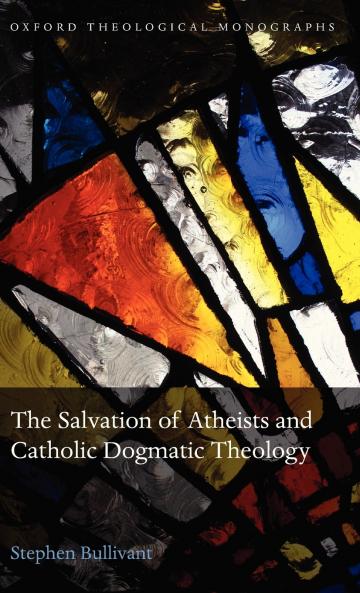
Since the Second Vatican Council (1962-5) the Catholic Church has formally declared the possibility of salvation for atheists: ''those who without fault have not yet arrived at an express recognition of God'' (Lumen Gentium 16). However in the very same document the Council also reiterates the traditional doctrine of the necessity of faith baptism and the mediation of Church in order for someone to be saved (Lumen Gentium 14). This monograph explores how these two seemingly contradictory claims may satisfactorily be reconciled. Specifically it asks - and ultimately answers - the question: How within the parameters of Catholic dogmatic theology is it possible for an atheist to be saved?As the first full-length study of this topic since Vatican II the book discusses crucial foundational issues - the understanding of ''atheist'' in Catholic theology; the developing views on both unbelief and the salvation of non-Christians in the decades preceding the Council - before tackling the conciliar teaching itself. Considerable attention is then given to the classic solution of imputing an ''implicit'' faith to righteous atheists best known from Karl Rahner''s theory of ''anonymous Christians'' (though the basic idea was advocated by many other major figures including Ratzinger Schillebeeckx de Lubac Balthasar and Küng). After discussing Rahner''s specific proposals in detail this kind of approach is however shown to be untenable. In its place a new way of understanding Vatican II''s optimism for atheists is developed in detail in light of scripture tradition and magisterium. This draws principally on Christ''s descent into Hell a renewed understanding of invincible ignorance and a literal interpretation of Matthew 25.
Piracy-free
Assured Quality
Secure Transactions
*COD & Shipping Charges may apply on certain items.
Review final details at checkout.
₹16676
Out Of Stock
All inclusive*
Details
ISBN 13
9780199652563
Publication Date
-01-06-2012
Pages
-228
Weight
-350 grams
Dimensions
-140x216x17.46 mm
