



This Book is Out of Stock!
English



Hardback
₹36785
(All inclusive*)
Delivery Options
*COD & Shipping Charges may apply on certain items.
Review final details at checkout.
Looking to place a bulk order? SUBMIT DETAILS
*COD & Shipping Charges may apply on certain items.
Review final details at checkout.
₹36785
Out Of Stock
All inclusive*
About The Book
Description
Author
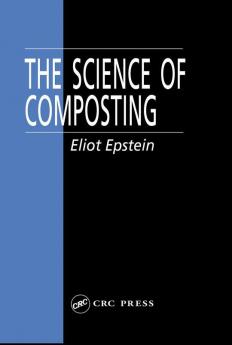
<p>FROM THE PREFACE<br>The main objective of composting is to transform organic materials into a stable usable product. Often organic materials which may have limited beneficial use in their raw state or have regulatory disposal constraints can be transformed by composting into marketable products. The limits on beneficial reuse may be regulations or they may be due to the potential for materials to be putrescible or pathogenic. Composting can be a solution for each of these.<br><br>The implementation of composting on a large scale (in contrast to home or backyard composting) involves materials handling. Technological implementation of composting must be consistent with the biological demand of the system. If the biological system is violated, conditions will not be optimized for composting, and problems such as odor generation, insufficient aeration or moisture, or a combination of these conditions may result. Past problems and closure of facilities have been largely due to violations of the biological systems. Product quality with respect to particle size, inclusions, moisture content and other physical aspects are a function of engineering design. A well designed system must have the biological and engineering principles in harmony at all times.</p> <p>Preface<br>Composting: A Prospective<br>Composting and Recycling <br>History <br>Philosophical Aspects and the Future of Composting in the United States <br>Advantages and Disadvantages of Composting <br>Conclusion <br>References<br><br>Basic Concepts<br>Introduction <br>Oxygen and Aeration <br>Moisture <br>Temperature <br>Nutrients: Carbon, Nitrogen, pH <br>Summary <br>References<br><br>Microbiology<br>Introduction <br>Microbial Populations <br>Temperature <br>Moisture <br>Nutrients <br>Inoculants <br>Summary <br>References<br><br>Biochemistry<br>Introduction <br>Organic Matter <br>Biochemical Manifestations Occurring during Composting <br>Biochemical Manifestations Occurring When Compost Is Applied to Soil <br>Humus Formation <br>Summary <br>References<br><br>Stability, Maturity, and Phytotoxicity<br>Introduction <br>Stability and Maturity:<br>Chemical Methods<br>Carbon/Nitrogen Ratio (C/N) <br>Nitrogen Species <br>pH <br>Cation Exchange Capacity (CEC) <br>Organic Chemical Constituents <br>Humification Parameters Humification Index<br>Relative Concentrations of Humic Acid to Fulvic Acid<br>Humic Substance<br>Functional Groups<br>Optical Density Physical Methods<br>Temperature and Heat Output <br>Color, Odor, Structure and Specific Gravity <br>Plant Assays <br>Microbiological Tests and Activities Respiration-Carbon Dioxide Evolution<br>Respiration-Oxygen Uptake<br>Microbial Changes <br>Enzyme Activity Phytotoxicity<br>Summary <br>References<br><br>Trace Elements, Heavy Metals, and Micronutrients<br>Introduction <br>Essentiality and Toxicity Arsenic (As)<br>Boron (B)<br>Cadmium (Cd)<br>Copper (Cu)<br>Lead (Pb)<br>Mercury (Hg)<br>Molybdenum (Mo)<br>Nickel (Ni)<br>Selenium (Se)<br>Zinc (Zn)<br>Occurrence in the Environment <br>Environmental Consequences Leachate Characteristics of Compost<br>Soil-Plant Interactions Type of Trace Element and Chemical State<br>Soil Acidity<br>Organic Matter<br>Cation Exchange Capacity (CEC)<br>Reversion to Unavailable Forms<br>Other Asp</p>

Piracy-free

Assured Quality

Secure Transactions

Fast Delivery

Sustainably Printed
Details
ISBN 13
9781566764780
Publication Date
-17-12-1996
Pages
-504
Weight
-764 grams
Dimensions
-152x229x27.89 mm
