


English



Paperback
₹5483
₹5687
3.59% OFF
(All inclusive*)
Delivery Options
Please enter pincode to check delivery time.
*COD & Shipping Charges may apply on certain items.
Review final details at checkout.
Looking to place a bulk order? SUBMIT DETAILS
Delivery Options
Please enter pincode to check delivery time.
*COD & Shipping Charges may apply on certain items.
Review final details at checkout.
About The Book
Description
Author(s)
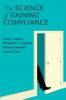
<p><em>The Science of Gaining Compliance </em>provides readers with an examination of key compliance-gaining techniques with the goal of making sense of their form effects mediators and moderators. Readers learn how compliance-gaining differs from other forms of social influence such as persuasion because it takes place in the active communication context of interpersonal encounters. The text emphasizes how compliance-gaining techniques don't rely on applying pressure and also focus on changing behavior rendering them a unique form of interpersonal communication.</p><p>&nbsp;</p><p>Opening chapters introduce the concept of compliance-gaining and investigate multimessage techniques including foot-in-the-door door-in-the-face and temptation techniques such as lowballing bait-and-switch and the lure. Later chapters present a set of single-message techniques including pregiving instilling guilt direct requests and confusion strategies. The final chapter summarizes each of the techniques as well as their similarities and differences.</p><p><em>&nbsp;</em></p><p><em>The Science of Gaining Compliance </em>is an exceptional text for courses and programs in communication and social influence.</p><p><strong style=color: rgba(51 51 51 1)>&nbsp;</strong></p><p><strong style=color: rgba(51 51 51 1)>Franklin J. Boster </strong><span style=color: rgba(51 51 51 1)>(Ph.D. Michigan State University)&nbsp;is an internationally recognized expert among scholars and researchers of social influence persuasion and communication research. He is professor emeritus in the Department of Communication at Michigan State University.</span></p><p><strong style=color: rgba(51 51 51 1)>&nbsp;</strong></p><p><strong style=color: rgba(51 51 51 1)>Christopher J. Carpenter </strong><span style=color: rgba(51 51 51 1)>(Ph.D. Michigan State University)&nbsp;is a professor in the Department of Communication at Western Illinois University. His research focuses on social influence and close relationships in online and offline contexts via computer-mediated and face-to-face channels.</span></p><p><span style=color: rgba(51 51 51 1)>&nbsp;</span></p><p><strong style=color: rgba(51 51 51 1)>Michael R. Kotowski</strong><span style=color: rgba(51 51 51 1)> (Ph.D. Michigan State University) is an associate professor in the School of Communication Studies at the University of Tennessee Knoxville. His research interests include developing and testing social influence theory.</span></p><p><strong style=color: rgba(51 51 51 1)>&nbsp;</strong></p><p><strong style=color: rgba(51 51 51 1)>Allison Z. Shaw </strong><span style=color: rgba(51 51 51 1)>(Ph.D. Michigan State University) is the director of student success and retention for the College of Communication Arts and Sciences at Michigan State University. She works closely with students faculty and staff to advocate for and provide guidance on policy and procedure related to improving student success outcomes.</span></p>

Piracy-free

Assured Quality

Secure Transactions

Fast Delivery

Sustainably Printed
Details
ISBN 13
9781793571915
Publication Date
-08-02-2024
Pages
-244
Weight
-336 grams
Dimensions
-152x229x13.04 mm
