


English


Paperback
₹3565
₹3611
1.27% OFF
(All inclusive*)
Delivery Options
Please enter pincode to check delivery time.
*COD & Shipping Charges may apply on certain items.
Review final details at checkout.
Looking to place a bulk order? SUBMIT DETAILS

Piracy-free

Assured Quality

Secure Transactions
About The Book
Description
Author
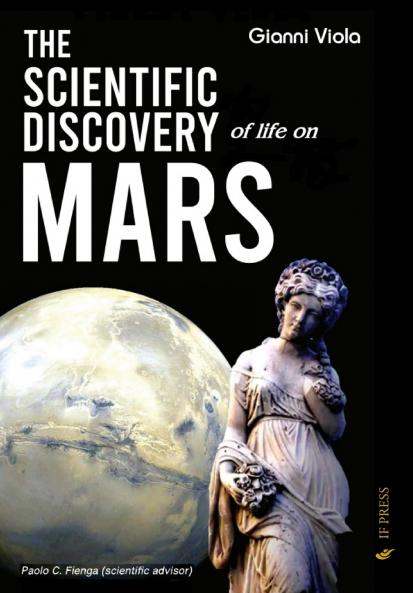
<p>Three centuries after Galileo Galilei's first observation of Mars (1609) the great Schiaparelli commenting on his findings since 1878 stated: Everything will depend on the progress made in the photographic representation of Mars in the coming years. The issue will take a big step forward when photographs are obtained that allow precise measurements to be taken from them. In these words he was actually foreshadowing without imagining it space flight and its use in place of telescopic observation! Observing the planet through a telescope he did so as a geographer and not as an astronomer and his very correct position at the time was not understood and it seems is still not understood today. In fact half a century later with the beginning of the space age (1971) and the use of automatic exploration probes research obtained the images that the great Italian scientist had already imagined in his brilliant intuitions.</p><p>However it appears that satellite images although of excellent quality have been systematically and unjustifiably excluded from scientific research. This exclusion has limited not only the breadth of planetary studies but also the interpretative possibilities offered by high-resolution data capable of revealing geological geomorphological and potentially biological features. Modern missions have provided an extraordinary archive of visual information yet much of this material has remained underutilized in traditional academic analyses.</p><p>For this reason in our scientific research we made full use of photographic material from the exploration of Mars studying the entire surface of the planet by applying the principles of planetography and nevertheless ascertaining the existence of life through the detection of numerous photographic evidence analysed photogrammetrically. By integrating geospatial methods with rigorous image evaluation we sought to restore to Martian studies the observational depth that Schiaparelli himself had envisioned long before the technological means existed.</p><p>The material used was taken entirely from NASA's photo library network of which the author was curator and collaborator at its Rome office. The direct access to archival resources ensured the reliability continuity and completeness of the photographic corpus examined.</p><p>With this study Mars has finally ceased to be a mystery becoming part of the common study of the human sciences not merely as an astronomical object but as a world whose surface history and potential biological traces can be investigated through the same analytical frameworks applied to terrestrial environments.</p>
Piracy-free
Assured Quality
Secure Transactions
Delivery Options
Please enter pincode to check delivery time.
*COD & Shipping Charges may apply on certain items.
Review final details at checkout.
Details
ISBN 13
9788867884261
Publication Date
-06-12-2025
Pages
-384
Weight
-619 grams
Dimensions
-170x244x26.5 mm
