

English



Paperback
₹1889
₹1973
4.26% OFF
(All inclusive*)
Delivery Options
Please enter pincode to check delivery time.
*COD & Shipping Charges may apply on certain items.
Review final details at checkout.
Looking to place a bulk order? SUBMIT DETAILS
Delivery Options
Please enter pincode to check delivery time.
*COD & Shipping Charges may apply on certain items.
Review final details at checkout.
About The Book
Description
Author
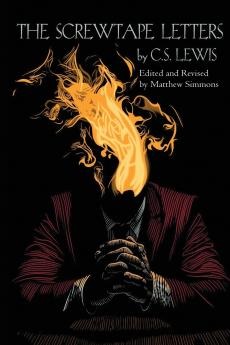
<h1>www.the-hijacked-mind.com</h1><h1></h1><h1>C. S. Lewis and The Screwtape Letters (EDITED VERSION)</h1><p></p><p>C. S. Lewis was a British scholar novelist and Christian apologist best known for works like The Chronicles of Narnia and the space-trilogy. In 1942 he published The Screwtape Letters a satirical epistolary novel that flips the usual moral perspective by letting readers eavesdrop on correspondence between two devils.</p><h2></h2><h2>Lewis's Life in Brief</h2><ul><li>Born in Belfast in 1898; educated at Oxford where he later became a fellow and tutor in English literature.</li><li>Converted from atheism to Christianity in 1931 largely influenced by friends like J. R. R. Tolkien.</li><li>Wrote popular theology (Mere Christianity) fiction (Narnia Space Trilogy) and scholarly works on medieval and Renaissance literature.</li></ul><h2>The Screwtape Letters: Core Facts</h2><p>The Screwtape Letters unfolds as thirty-one letters from Screwtape a senior tempter in Hell's bureaucracy to his nephew Wormwood guiding him in corrupting the soul of an unnamed British Patient. Lewis dedicated the book to Tolkien; its installments first appeared in The Guardian during WWII before being collected into a single volume in February 1942.</p><h2>Structure and Plot</h2><ol><li>Thirty-one consecutive letters each focusing on a particular tactic of temptation.</li><li>Screwtape's mentorship covers everything from exploiting pride and envy to perverting prayer and virtues.</li><li>The Patient's journey-from a nominal Christian to a committed believer-unfolds in parallel often frustrating Hell's designs.</li><li>A final twist reveals Wormwood's failure underscoring God's grace over devilish schemes.</li></ol><h2>Key Themes</h2><ul><li>Temptation as a subtle incremental process rather than grand dramatic sin.</li><li>The humor and horror of viewing human life from a diabolical perspective.</li><li>The war-time setting amplifies questions of fear duty and mortality.</li><li>Inversion of Christian concepts: Screwtape praises spiritual apathy and worldly distractions as virtues.</li></ul><h2>Style and Rhetoric</h2><p>Lewis uses irony understatement and mock-bureaucratic language to:</p><ul><li>Illuminate how everyday choices can erode faith.</li><li>Satirize both human foibles and the devil's management style.</li><li>Engage readers with wit that sharpens theological insights.</li></ul><h2>Background of Conception</h2><p>Lewis conceived the idea after a Sunday service in Headington imagining how easy it is to dramatize evil and how nearly impossible it would be to render genuine angelic discourse. He even planned a companion piece from a guardian-angel's point of view but abandoned it noting that true heavenly style seemed beyond his reach.</p><h2></h2>

Piracy-free

Assured Quality

Secure Transactions

Fast Delivery

Sustainably Printed
Details
ISBN 13
9798349585890
Publication Date
-26-09-2025
Pages
-218
Weight
-302 grams
Dimensions
-152x229x11.69 mm
