




This Book is Out of Stock!
English




Hardback
₹17669
₹25478
30.65% OFF
(All inclusive*)
Delivery Options
*COD & Shipping Charges may apply on certain items.
Review final details at checkout.
Looking to place a bulk order? SUBMIT DETAILS

Piracy-free

Assured Quality

Secure Transactions
About The Book
Description
Author(s)
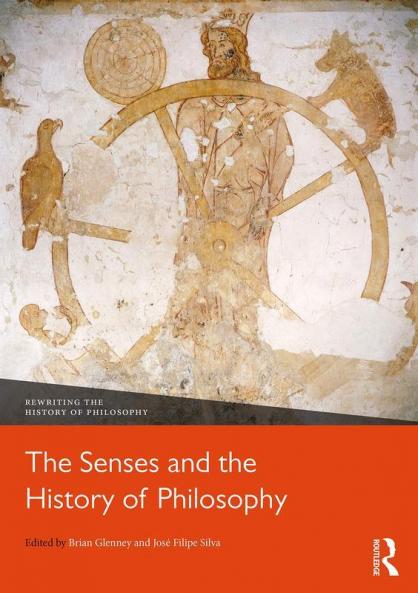
<p>The study of perception and the role of the senses have recently risen to prominence in philosophy and are now a major area of study and research. However, the philosophical history of the senses remains a relatively neglected subject. Moving beyond the current philosophical canon, this outstanding collection offers a wide-ranging and diverse philosophical exploration of the senses, from the classical period to the present day. Written by a team of international contributors, it is divided into six parts:</p><ul> <p> </p> <li>Perception from Non-Western Perspectives</li> <li>Perception in the Ancient Period </li> <li>Perception in the Medieval Latin/Arabic Period</li> <li>Perception in the Early Modern Period</li> <li>Perception in the Post-Kantian Period</li> <li>Perception in the Contemporary Period.</li> </ul><p>The volume challenges conventional philosophical study of perception by covering a wide range of significant, as well as hitherto overlooked, topics, such as perceptual judgment, temporal and motion illusions, mirror and picture perception, animal senses and cross-modal integration. By investigating the history of the senses in thinkers such as Plotinus, Auriol, Berkeley and Cavendish; and considering the history of the senses in diverse philosophical traditions, including Chinese, Indian, Byzantine, Greek and Latin it brings a fresh approach to studying the history of philosophy itself.</p><p>Including a thorough introduction as well as introductions to each section by the editors, <i>The Senses and the History of Philosophy</i> is essential reading for students and researchers in the history of philosophy, perception, philosophy of mind, philosophical psychology, aesthetics and eastern and non-western philosophy. It will also be extremely useful for those in related disciplines such as psychology, religion, sociology, intellectual history and cognitive sciences.</p> <p>General Introduction <em>Brian Glenney and José Filipe Silva </em><b>Part 1: Problems of Perception from Non-Western Perspectives </b>Introduction to Part 1 <em>Brian Glenney and José Filipe Silva </em>1. Chinese Theories of Perception and the Structural Approach to Comprehension <em>Jana S. Rošker </em>2. Perception and its Disorders in Early China <em>Susan Blake </em>3. Perception in Nyāya <em>Stephen Phillips </em><b>Part 2: Problems of Perception in the Ancient Period </b>Introduction to Part 2 <em>Brian Glenney and José Filipe Silva </em>4. Puzzles in Post-Aristotelian Theories of Perception <em>Katerina Ierodiakonou </em>5. Plotinus on Perception <em>Anna Marmodoro </em><b>Part 3: Problems of Perception in the Medieval Latin/Arabic Period </b>Introduction to Part 3 <em>Brian Glenney and José Filipe Silva </em>6. Perceptual Errors in Late Medieval Philosophy <em>José Filipe Silva and Juhana Toivanen </em>7. What is in the Mirror? The Metaphysics of Mirror Images in Albert the Great and Peter Auriol <em>Lukáš Lička </em>8. Peter Auriol and Adam Wodeham on Perception and Judgment <em>H.T. Adriaenssen </em><b>Part 4: Problems of Perception in the Early Modern Period </b>Introduction to Part 4 <em>Brian Glenney and José Filipe Silva </em>9. Anton Wilhelm Amo and the Problems of Perception <em>Chris Meyns </em>10. Locke on Molyneux’s Question and Perceptual Concepts of Shape <em>Janet Levin </em>11. Berkeley's Account of Extension and its Place in Vision Science <em>Robert Schwartz </em>12. Berkeley and Reid on the Moon Illusion <em>James Van Cleve </em>13. Margaret Cavendish on Perceptual Mistakes <em>Deborah Boyle </em><b>Part 5: Problems of Perception in the Post-Kantian Period </b>Introduction to Part 5 <em>Brian Glenney and José Filipe Silva </em>14. Husserl Takes Santonin: The Phenomenology of Perceptual Abnormality <em>Michael Madary </em>15. Molyneux’s Question: Out of Touch with the World of the Blind <em>Brian Glenney </em><b>Part 6: Problems of Perception in the Contemporary Period </b>Introduction to Part 6 <em>Brian Glenney and José Filipe Silva </em>16. Visual Categorization <em>Josefa Toribio </em>17. Perceiving Surfaces (and What They Depict) <em>Gabriele Ferretti </em>18. It’s Not As Bad As You Think: Olfaction and Informational Richness <em>Clare Batty </em>19. Molyneux, neuroplasticity, and technologies of sensory substitution <em>Mark Paterson</em><em>. Index</em></p>
Piracy-free
Assured Quality
Secure Transactions
*COD & Shipping Charges may apply on certain items.
Review final details at checkout.
₹17669
₹25478
30% OFF
Hardback
Out Of Stock
All inclusive*
Details
ISBN 13
9781138738997
Publication Date
-01-03-2019
Pages
-376
Weight
-733 grams
Dimensions
-174x246x21.32 mm
