

English


₹7456
(All inclusive*)
Hardback
Delivery Options
Please enter pincode to check delivery time.
*COD & Shipping Charges may apply on certain items.
Review final details at checkout.
Looking to place a bulk order? SUBMIT DETAILS
Delivery Options
Please enter pincode to check delivery time.
*COD & Shipping Charges may apply on certain items.
Review final details at checkout.
About The Book
Description
Author
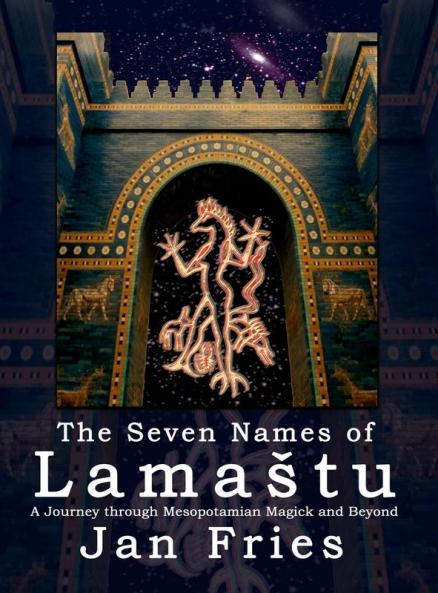
The Seven Names of Lamastu is an exploration of the religions and mysteries of the cradle of civilisation Mesopotamia by Jan Fries author of K?l? Kaula and Dragon Bones. The Sumerians developed the first functional script (3500-3200 BC) the priests wrote god lists dictionaries catalogues recorded spells myth and poetry – and committed the first known medical prescriptions and rituals into writing. In the centre of their faith lurks the lustful animal-headed goddess DIM.ME/Lamaštu exiled from Heaven for her forbidden desires and charged by the council of Gods with a fearsome task: to cull the vulnerable and keep the human population within manageable limits. For all but a few her name conjured terror in the hearts of Mesopotamians. Jan Fries seeks to redress the balance by showing that this rebellious goddess so demonized by superstitious folk and modern academics is an essential expression of the divine. Lamaštu’s numerous but rarely discussed positive attributes bring her into focus. She is a victorious goddess who listens to prayers haunts both swamps and the mountain forests she loves banishes lethal spirits helps with the birth of wild animals and adopts stray piglets and puppies. She is a sacred woman a priestess and a midwife to her brothers the gods. This is a modern translation of the famous Lamaštu Series with commentary which can be used as a dictionary and travel companion through the earliest form of religion and sorcery. It is a journey that takes us through the rise and fall of empires the changing status of women Sacred Marriage everyday rituals sacrifice divination ritual training conjuration banishment vengeful magic spells and counterspells dream-magic the dawn of science medicine and ritual music – with teachings on how to build your own civilisation using only rivers reeds and clay. Lamaštu takes us from a lion-headed Stone-Age statuette in Central Europe all the way to China. Identified with the goddesses Lil?tu and Ardat Lilî by the end of the second millennia she emerges in medieval Spain as the modern Lilith. In the Arabian desert her counterpart is the dreaded ?ar?na in ancient Greece she becomes the Lamia. She inspired the artwork of the Gorgo Medusa connects with hundreds of terrifying and deadly “mothers” in India and becomes the dreaded Albasti/Lobasta in Turkey and China. In China she is closely related to the tiger-fanged Daoist goddess Xiwangmu the goddess Guimu (Mother of Ghosts) and the Buddhist deity Harir?. The book concludes with the mysteries meditations and practical rituals of Si?hamukh? the Lion-headed Goddess of Hindu and Buddhist Tantra and a set of innovative syncretistic meditations and trances based on the Seven Names of Lamaštu. Child of Heaven. Watchful One of the Gods of the Streets. Decapitator. Fire-Starter. Wild-Countenance. Trusted. Oathbound Free to Fly. Seven names of an ancient goddess. Seven names to remember.

Piracy-free

Assured Quality

Secure Transactions

Fast Delivery

Sustainably Printed
Details
ISBN 13
9781910191057
Publication Date
-31-03-2017
Pages
-580
Weight
-1499 grams
Dimensions
-216x280x31.75 mm
