


This Book is Out of Stock!
English


Paperback
₹2293
₹2550
10.06% OFF
(All inclusive*)
Delivery Options
*COD & Shipping Charges may apply on certain items.
Review final details at checkout.
Looking to place a bulk order? SUBMIT DETAILS

Piracy-free

Assured Quality

Secure Transactions
About The Book
Description
Author
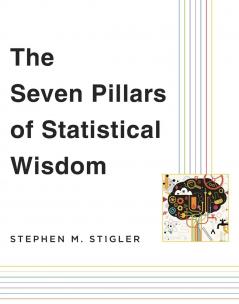
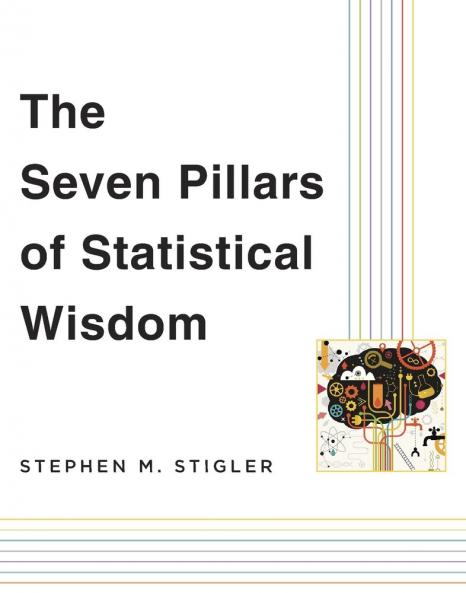
<p>What gives statistics its unity as a science? Stephen Stigler sets forth the seven foundational ideas of statistics--a scientific discipline related to but distinct from mathematics and computer science. <p/>Even the most basic idea--<i>aggregation</i> exemplified by averaging--is counterintuitive. It allows one to gain information by discarding information namely the individuality of the observations. Stigler's second pillar <i>information measurement </i>challenges the importance of big data by noting that observations are not all equally important: the amount of information in a data set is often proportional to only the square root of the number of observations not the absolute number. The third idea is <i>likelihood</i> the calibration of inferences with the use of probability. <i>Intercomparison</i> is the principle that statistical comparisons do not need to be made with respect to an external standard. The fifth pillar is <i>regression</i> both a paradox (tall parents on average produce shorter children; tall children on average have shorter parents) and the basis of inference including Bayesian inference and causal reasoning. The sixth concept captures the importance of <i>experimental design</i>--for example by recognizing the gains to be had from a combinatorial approach with rigorous randomization. The seventh idea is the <i>residual</i>: the notion that a complicated phenomenon can be simplified by subtracting the effect of known causes leaving a residual phenomenon that can be explained more easily. <p/><i>The Seven Pillars of Statistical Wisdom</i> presents an original unified account of statistical science that will fascinate the interested layperson and engage the professional statistician.</p>
Piracy-free
Assured Quality
Secure Transactions
*COD & Shipping Charges may apply on certain items.
Review final details at checkout.
₹2293
₹2550
10% OFF
Paperback
Out Of Stock
All inclusive*
Details
ISBN 13
9780674088917
Publication Date
-07-03-2016
Pages
-240
Weight
-162 grams
Dimensions
-137.2x175.3x14.64 mm
