


This Book is Out of Stock!
English


₹926
₹999
7.28% OFF
(All inclusive*)
Paperback
Delivery Options
*COD & Shipping Charges may apply on certain items.
Review final details at checkout.
Looking to place a bulk order? SUBMIT DETAILS
*COD & Shipping Charges may apply on certain items.
Review final details at checkout.
₹926
₹999
7% OFF
Paperback
Out Of Stock
All inclusive*
About The Book
Description
Author
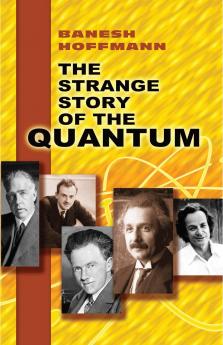
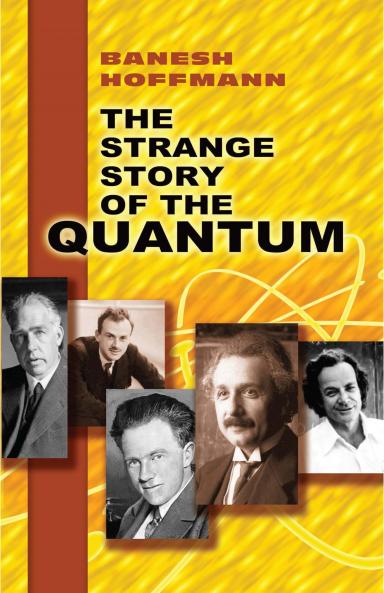
<p>Completely non-mathematical yet wholly faithful to the basic concepts of quantum mechanics this book tells the fascinating story of the most thoroughgoing revolution in physics since Newton.<br>In the first year of the twentieth century a professor of theoretical physics in Berlin Max Planck suggested that light was not absorbed smoothly but rather in small bundles or quanta. Five years later a Swiss patent clerk Albert Einstein proposed that the radiation itself must exist as quanta. Thus was born a new age in physics -- the age of the quantum -- in which some of the most basic assumptions of classical physics were swept away and a magnificent new theoretical structure created.<br>This new physics was steeped in higher mathematics. Its concepts were often in contradiction with common sense. It rapidly became increasingly abstract and complex to such an extent that even those well versed in classical physics were often unable to follow its labyrinthine turns and twists. How then could the layman understand it?<br>This book answers that question. By means of analogies examples and imaginative insights it acquaints the layman with the historical development and basic meaning of such momentous theories and discoveries as Bohr's energy levels of the atom Pauli's exclusion principle de Broglie's wave theory Bohr's correspondence principle. Schroedinger's wave equation Heinsenberg's uncertainty principle Dirac's fundamental laws of quantum mechanics Sommerfeld's fine structure theory Feynman's world lines electron spin invariance the quantum number and numerous other concepts that so drastically changed our notion of the universe. A long postscript written especially for this edition brings the reader abreast of events to 1958. <br>Of the books attempting an account of the history and contents of modern atomic physics which have come to my attention this is the best. The captivating beauty of its prose the ingenuity of its organization and the peculiar adequacy of its analogies entitle a reviewer of this book to such luxurious praise. -- Henry Margenau Professor of Physics Yale University.</p>

Piracy-free

Assured Quality

Secure Transactions

Fast Delivery

Sustainably Printed
Details
ISBN 13
9780486205182
Publication Date
-14-01-2011
Pages
-68
Weight
-92 grams
Dimensions
-202.2x202.2x4.58 mm
