


English




Hardback
₹14566
₹19833
26.56% OFF
(All inclusive*)
Delivery Options
Please enter pincode to check delivery time.
*COD & Shipping Charges may apply on certain items.
Review final details at checkout.
Looking to place a bulk order? SUBMIT DETAILS
Delivery Options
Please enter pincode to check delivery time.
*COD & Shipping Charges may apply on certain items.
Review final details at checkout.
About The Book
Description
Author
Shoutouts
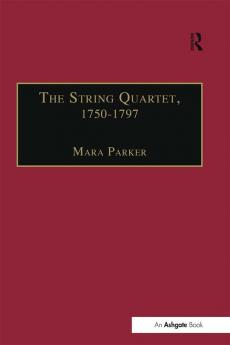
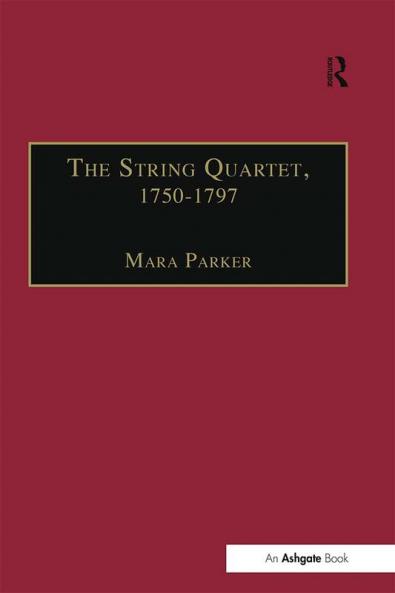
The second half of the eighteenth century witnessed a flourishing of the string quartet often represented as a smooth and logical progression from first violin-dominated homophony to a more equal conversation between the four voices. Yet this progression was neither as smooth nor as linear as previously thought as Mara Parker illustrates in her examination of the string quartet during this period. Looking at a wide variety of string quartets by composers such as Pleyel Distler and Filtz in addition to Haydn and Mozart the book proposes a new way of describing the relationships between the four instruments in different works. Broadly speaking these relationships follow one of four patterns: the 'lecture' the 'polite conversation' the 'debate' and the 'conversation'. In focusing on these musical discourses it becomes apparent that each work is the product of its composer's stylistic choices location intended performers and intended audience. Instead of evolving in a strict and universal sequence the string quartet in the latter half of the eighteenth century was a complex genre with composers mixing and matching musical discourses as circumstances and their own creative impulses required.

Piracy-free

Assured Quality

Secure Transactions

Fast Delivery

Sustainably Printed
Details
ISBN 13
9781840146820
Publication Date
-13-09-2002
Pages
-336
Weight
-571 grams
Dimensions
-156x234x19.26 mm
