




This Book is Out of Stock!
English



Hardback
₹6808
₹8075
15.69% OFF
(All inclusive*)
Delivery Options
*COD & Shipping Charges may apply on certain items.
Review final details at checkout.
Looking to place a bulk order? SUBMIT DETAILS

Piracy-free

Assured Quality

Secure Transactions
About The Book
Description
Author(s)
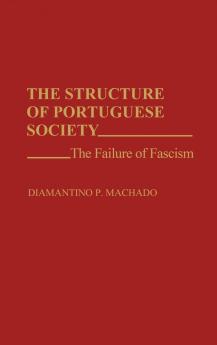
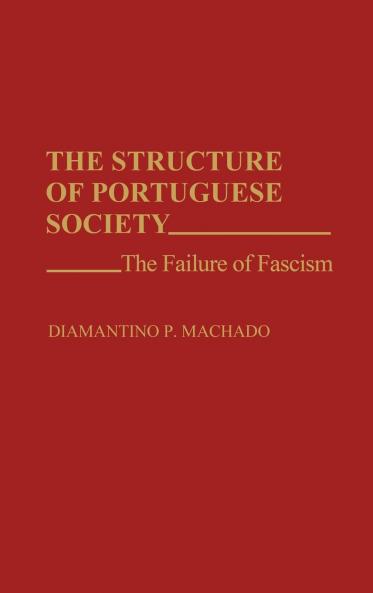
This macrohistorical study sheds light on the Portuguese Paradox: why a country with a vast and wealthy colonial empire became the poorest and most backward of Western European nations. Employing a class conflict perspective Diamantino P. Machado examines Portugal''s Estado Novo and the eventual collapse of the reactionary coalition. He analyzes the important role of the state in Portugal''s political economy between 1926 and 1974 offering new insights about the Estado Novo Salazar the military and bureaucratic-authoritarian states.Machado focuses on five aspects of Portuguese society: the transition from latifundia agriculture to industrial oligopoly; the role of the state during the reactionary coalition regime (1926-1974); the African Wars; the changing structure of the Portuguese military officer corps; and the revolution of 1974 and its aftermath. Analyzing the state as a vehicle for class domination Machado concludes that the reactionary coalition caused Portugal to become the poorest most underdeveloped country in Western Europe in part by allowing foreigners and a small Portuguese elite to exploit the country''s immense overseas empire. This book is valuable to scholars of European history sociology comparative politics and political economy.
Piracy-free
Assured Quality
Secure Transactions
*COD & Shipping Charges may apply on certain items.
Review final details at checkout.
₹6808
₹8075
15% OFF
Hardback
Out Of Stock
All inclusive*
Details
ISBN 13
9780275937843
Publication Date
-30-12-1991
Pages
-242
Weight
-442 grams
Dimensions
-156x234x14.29 mm
