

English


Hardback
₹1150
₹1938
40.66% OFF
(All inclusive*)
Delivery Options
Please enter pincode to check delivery time.
*COD & Shipping Charges may apply on certain items.
Review final details at checkout.
Looking to place a bulk order? SUBMIT DETAILS
Delivery Options
Please enter pincode to check delivery time.
*COD & Shipping Charges may apply on certain items.
Review final details at checkout.
About The Book
Description
Author
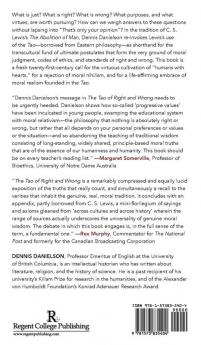
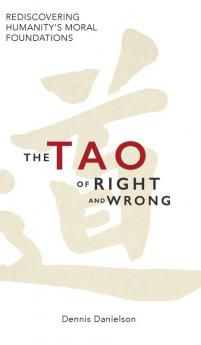
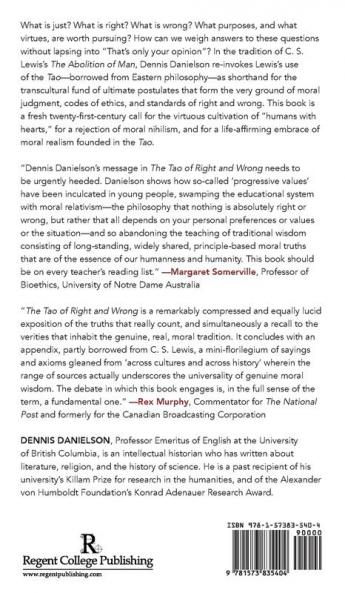
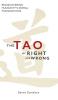
<p>What is just? What is right? What is wrong? What purposes and what virtues are worth pursuing? How can we weigh answers to these questions without lapsing into &ldquo;That&rsquo;s only your opinion&rdquo;? In the tradition of C. S. Lewis&rsquo;s <em>The Abolition of Man</em> Dennis Danielson re-invokes Lewis&rsquo;s use of the <em>Tao</em>&mdash;borrowed from Eastern philosophy&mdash;as shorthand for the transcultural fund of ultimate postulates that form the very ground of moral judgment codes of ethics and standards of right and wrong. This book is a fresh twenty-first-century call for the virtuous cultivation of &ldquo;humans with hearts&rdquo; for a rejection of moral nihilism and for a life-affirming embrace of moral realism founded in the <em>Tao</em>.</p><p>&ldquo;Dennis Danielson&rsquo;s message in <em>The Tao of Right and Wrong</em> needs to be urgently heeded. Danielson shows how so-called &lsquo;progressive values&rsquo; have been inculcated in young people swamping the educational system with moral relativism&mdash;the philosophy that nothing is absolutely right or wrong but rather that all depends on your personal preferences or values or the situation&mdash;and so abandoning the teaching of traditional wisdom consisting of long-standing widely shared principle-based moral truths that are of the essence of our humanness and humanity. This book should be on every teacher&rsquo;s reading list.&rdquo; <strong>&mdash;Margaret Somerville</strong> Professor of Bioethics University of Notre Dame Australia&nbsp;</p><p>&ldquo;<em>The Tao of Right and Wrong</em> is a remarkably compressed and equally lucid exposition of the truths that really count and simultaneously a recall to the verities that inhabit the genuine real moral tradition. It concludes with an appendix partly borrowed from C. S. Lewis a mini-florilegium of sayings and axioms gleaned from &lsquo;across cultures and across history&rsquo; wherein the range of sources actually underscores the universality of genuine moral wisdom. The debate in which this book engages is in the full sense of the term a fundamental one.&rdquo; <strong>&mdash;Rex Murphy</strong> Commentator for <em>The National Post</em> and formerly for the Canadian Broadcasting Corporation</p><p>&ldquo;Dennis Danielson marks the seventy-fifth anniversary of C.S. Lewis&rsquo;s classic work&nbsp;<em>The Abolition of Man&nbsp;</em>by updating it for our present situation and applying it to current concerns in a skilful and thought-provoking way. Timely deft impressive. Read it!&rdquo;&nbsp;<strong>&mdash;Michael Ward</strong> University of Oxford co-editor of&nbsp;<em>The Cambridge Companion to C.S. Lewis</em></p><p><strong>Dennis Danielson</strong> Professor Emeritus of English at the University of British Columbia is an intellectual historian who has written about literature religion and the history of science. He is a past recipient of his university&rsquo;s Killam Prize for research in the humanities and of the Alexander von Humboldt Foundation&rsquo;s Konrad Adenauer Research Award.</p>

Piracy-free

Assured Quality

Secure Transactions

Fast Delivery

Sustainably Printed
Details
ISBN 13
9781573835404
Publication Date
-15-06-2018
Pages
-134
Weight
-207 grams
Dimensions
-127x203x9.53 mm
