

English


Paperback
₹6317
(All inclusive*)
Delivery Options
Please enter pincode to check delivery time.
*COD & Shipping Charges may apply on certain items.
Review final details at checkout.
Looking to place a bulk order? SUBMIT DETAILS

Piracy-free

Assured Quality

Secure Transactions
About The Book
Description
Author
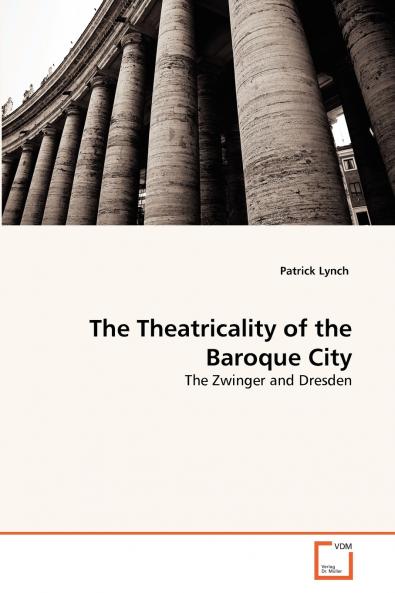
Most historians of baroque architecture agree that it is 'theatrical' in some way without describing in detail the festivals and performances that inspired its design. Yet festivals structured public life in most early 18th century European cities and were a central aspect of what is commonly called the Baroque Unity of the Arts. As festivals became a permanent aspect of city life the character and morphology of buildings changed too. Facades became explicitly stage-like transforming civic spaces into theatres. The universal motifs of the niche and portico reveal that baroque buildings were primarily settings for performances. We still sense today the latent drama of these spaces. This book is an attempt to explain why festivals were an essential aspect of baroque culture and why 'festive-time' remains crucial for the study and design of cities. This study proceeds from a hermeneutic investigation of the public character of art-experience understood in Hans-Georg Gadamer's terms as 'Play Symbol and Festival' towards an interpretation of several gardens and civic spaces designed specifically for festive use focusing ultimately upon the Zwinger and its use as a Festspielplatz.
Piracy-free
Assured Quality
Secure Transactions
Delivery Options
Please enter pincode to check delivery time.
*COD & Shipping Charges may apply on certain items.
Review final details at checkout.
Details
ISBN 13
9783639356700
Publication Date
-10-06-2011
Pages
-152
Weight
-216 grams
Dimensions
-150x220x8.41 mm
