



This Book is Out of Stock!
English




Hardback
₹29428
(All inclusive*)
Delivery Options
*COD & Shipping Charges may apply on certain items.
Review final details at checkout.
Looking to place a bulk order? SUBMIT DETAILS
*COD & Shipping Charges may apply on certain items.
Review final details at checkout.
₹29428
Out Of Stock
All inclusive*
About The Book
Description
Author
Shoutouts
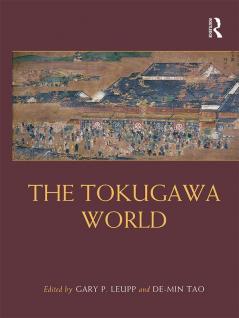
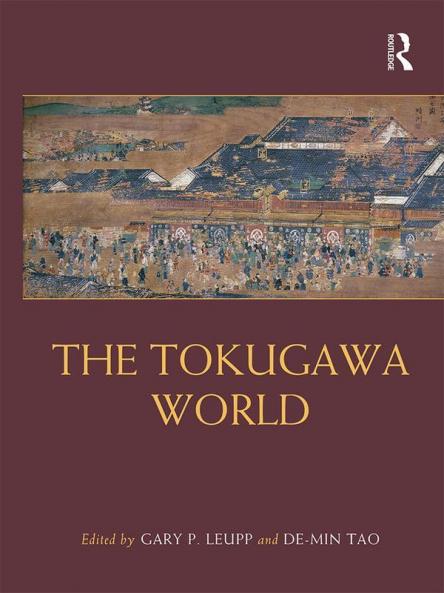
<p>With over 60 contributions, <i>The Tokugawa World </i>presents the latest scholarship on early modern Japan from an international team of specialists in a volume that is unmatched in its breadth and scope.</p><p>In its early modern period, under the Tokugawa shoguns, Japan was a world apart. For over two centuries the shogun’s subjects were forbidden to travel abroad and few outsiders were admitted. Yet in this period, Japan evolved as a nascent capitalist society that could rapidly adjust to its incorporation into the world system after its forced "opening" in the 1850s. <em>The Tokugawa World</em> demonstrates how Japan’s early modern society took shape and evolved: a world of low and high cultures, comic books and Confucian academies, soba restaurants and imperial music recitals, rigid enforcement of social hierarchy yet also ongoing resistance to class oppression. A world of outcasts, puppeteers, herbal doctors, samurai officials, businesswomen, scientists, scholars, blind lutenists, peasant rebels, tea-masters, sumo wrestlers, and wage workers. </p><p>Covering a variety of features of the Tokugawa world including the physical landscape, economy, art and literature, religion and thought, and education and science, this volume is essential reading for all students and scholars of early modern Japan.</p> <p>Introduction</p><p><strong>Part I: National Reunification, 1563-1603</strong></p><p>1. The Three Unifiers of the Empire (<i>Tenka</i>): Nobunaga (1534-82), Hideyoshi (1536-98) and Ieyasu (1543-1616)<i> </i></p><p><i>Fujita Tatsuo</i></p><p>2. Japan’s Invasions of Korea in 1592-98 and the Hideyoshi Regime</p><p><i>Nam-Lin Hur</i></p><p>3. The Life and Afterlife of Tokugawa Ieyasu (1543-1616)</p><p><i>Morgan Pitelka</i></p><p><b>Part II: The Physical Landscape </b></p><p>4. Water Management in Tokugawa Japan</p><p><i>Murata Michihito</i> </p><p>5. The King Yu Legend and Flood Control in Tokugawa Japan</p><p><i>Wang Min</i></p><p>6. Earthquakes in Historical Context</p><p><i>Gregory Smits </i></p><p>7. The Centre of the Shogun’s Realm: Building Nihonbashi<i> </i></p><p><i>Timon Screech</i></p><p><b>Part III: Tokugawa Society</b> </p><p>8. The Samurai in Tokugawa Japan</p><p><i>Constantine Vaporis</i></p><p>9. Villages and Farmers in the Tokugawa Period </p><p><i>Watanabe Takashi</i></p><p>10. Popular Movements in the Edo Period: Peasants, Peasant Uprisings, and the Development of Lawful Petitions</p><p><i>Taniyama Masamichi</i></p><p>11. Coastal Whaling and Its Impact on Early Modern Japan</p><p><i>Jakobina Arch </i></p><p>12. Outcastes and Their Social Roles in Tokugawa Japan</p><p><i>Maren Ehlers</i></p><p><b>Part IV: Family, Gender, Sexuality and Reproduction</b> </p><p>13. Women in Cities and Towns</p><p><i>Amy Stanley</i></p><p>14. Childhood in Tokugawa Japan</p><p><em>Kristin Williams</em></p><p>15. Growing Small Bodies at the Point of Skin: Young Children’s Bodies and Health in Sacred Skinscape</p><p><i>William Lindsey</i></p><p><b>Part V: Tokugawa Economy</b></p><p>16. Food Fights, But It’s Always for Fun in Early Modern Japan</p><p><i>Eric Rath</i></p><p>17. The Silk Weavers of Nishijin: Wage-Laborers in the Tokugawa World </p><p><i>Gary P. Leupp</i></p><p>18. The Marketing of Human Waste and Urban-fringe Agriculture around the Tokugawa Cities</p><p><i>Tajima Kayo</i></p><p><b>Part VI: Tokugawa Japan in the World</b></p><p>19. Japan and the World in Tokugawa Maps</p><p><i>Kären Wigen</i></p><p>20. <em>Nihonmachi </em>in Southeast Asia in the Late Sixteenth-Early Seventeenth Centuries</p><p><i>Travis Seifman</i></p><p>21. Rethinking Ezo-chi, the Ainu, and Tokugawa Japan in Global Perspective</p><p><i>Noémy Godefroy</i></p><p>22. The Opening of the Tokugawa World and Japan’s Foreign Relations: The Visits of Korean Embassies to Japan</p><p><i>Nakao Hiroshi</i></p><p>23. Early Modern Ryukyu Between China and Japan</p><p><i>Watanabe Miki</i></p><p>24. Dutch East India Company Relations With Tokugawa Japan</p><p><i>Adam Clulow</i></p><p>25. The Presence of Black People in Japan During the Edo Perio</p><p><i>Fujita Midori</i></p><p>26. Seventeenth Century Chinese Émigrés and Sino-Japanese Cultural Exchanges</p><p><i>Shyu Shing-ching</i></p><p>27. Selective Sakoku? Tantalizing Hints of Japanese in China after the Tokugawa Maritime Prohibition</p><p><i>Xing Hang</i></p><p>28. Tokugawa Japan and the Rise of Modern Racial Thought in the West</p><p><i>Rotem Kowner</i></p><p><b>Part VII: The Performing Arts and Sport</b></p><p>29. The Musical World of Tokugawa Japan </p><p><i>Alison Tokita</i></p><p>30. Visual Disability and Musical Culture in Edo-Period Japan</p><p><i>Gerald Groemer</i></p><p>31. Tominaga Nakamoto (1715-1746) and <i>Gagaku</i> (Court Music)</p><p><i>Intō Kazuhiro</i></p><p>32. Staging Senseless Violence: Early <i>Jōruri</i> Puppet Theater and the Culture of Performance</p><p><i>Keller Kimbrough</i></p><p>33. Rural Kabuki and the Imagination of Japanese Identity in the Late Tokugawa Period</p><p><i>William Fleming</i></p><p>34. Sumo Wrestling in the Tokugawa Period </p><p><i>Lee Thompson</i></p><p><b>Part VIII: Art and Literature</b> </p><p>35. <em>Shunga</em> in Tokugawa Society and Culture </p><p><i>Andrew Gerstle</i></p><p>36. Uses of <i>Shunga </i>and<i> Ukiyoe</i> in the Tokugawa Period</p><p><i>Hayakawa Monta</i></p><p>37. Two Paths of Love in the Fiction of Ihara Saikaku</p><p><i>David Gundry</i></p><p>38. Furuta Oribe: Controversial Daimyo Tea Master</p><p><i>Kaminishi Ikumi</i></p><p>39. Grass Booklets and the Roots of Manga: Comic Books in the Tokugawa Period</p><p><i>Glynne Walley</i></p><p>40. An Iconology of the Orchid Pavilion Gathering: Image, Text, and Communities in Tokugawa-Era Japan</p><p><i>Kameda-Madar Kazuko</i></p><p>41. The Folk Worldview of <i>Chronicles of the Eight Dog Heroes of the Satomi Clan of Nansō</i></p><p><i>Inoue Atsushi</i></p><p>42. Okakura Kakuzō and the Osaka Painting Schools of the Tokugawa Era </p><p><i>Nakatani Nobuo</i></p><p>43. The Rise and Fall and Spring of Haiku</p><p><i>Adam L. Kern</i></p><p><b>Part IX: Religion and Thought</b></p><p>44. Christians, Christianity and <i>Kakure Kirishitan</i> in Japan (1549-1868)</p><p><i>Jan Leuchtenberger</i></p><p>45. Pilgrimage in Tokugawa Japan</p><p><i>Barbara Ambros</i></p><p>46. Structuring the Canon: Exceptionalism and <i>Kokugaku</i></p><p><i>Mark McNally</i></p><p>47. The Image of Susanoo in Hirata Atsutane’s <i>Koshiden</i> </p><p><i>Tajiri Yūichirō</i></p><p>48. Itō Jinsai and the Origins of Classical Learning (<i>Kogaku</i>) </p><p><i>Tsuchida Kenjirō</i></p><p>49. Mapping Intellectual History: The Neo-Confucian Schools of Zhu Xi, Wang Yangming, and Ogyū Sorai as Mirrored in Islamic Thought</p><p><i>Kojima Yasunori</i></p><p>50. Emperor-Centrism and the Historiography of the Mito School</p><p><em>Kojima Tsuyoshi</em></p><p>51. <em>Heigaku</em> and <i>Bushidō</i>: Military Thought in the Tokugawa World</p><p><i>Maeda Tsutomu</i></p><p>52. Confucian Views of Life and Death</p><p><i>Takahashi Fumihiro</i></p><p><b>Part X: Education and Science</b></p><p>53. Tokugawa Popular Education</p><p><i>Brian Platt</i></p><p>54. The <i>Greater Learning for Women</i> and Women’s Moral Education in Tokugawa Japan</p><p><i>Yabuta Yutaka </i></p><p>55. "Reading" of the Chinese Classics and the History of Thought in the Edo Period </p><p><i>Nakamura Shunsaku</i></p><p>56. Health, Disease and Epidemics in Late Tokugawa Japan</p><p><i>William Johnston</i></p><p>57. Doctors and Herbal Medicine in Tokugawa Japan</p><p><i>Machi Sunjurō</i></p><p>58. The History of Natural History in Tokugawa Japan</p><p><i>Federico Marcon</i></p><p>59. Attitudes Toward Celestial Events in Tokugawa Japan</p><p><i>Sugi Takeshi</i></p><p><b>Part XI: Epilogue</b></p><p>60. From Feudalism to Meritocracy?: Growing Demand for Competent and Efficient Government in the Late Tokugawa Period</p><p><i>Matsuda Koichirō</i></p><p>61. Shōin and Changing Worldviews in the Late Tokugawa Period</p><p><i>Kirihara Kenshin</i></p><p>62. The Shinsengumi: Shadows and Light in the Last Days of the Tokugawa Shogunate</p><p><i>Kimura Yukihiko</i></p><p>63. <em>Katsu Kaishū and Yokoi Shōnan</em>: Late Tokugawa Imaginings of a More Democratic Japan</p><p><i>William Steele</i></p><p>64. Confucian Education in the Formative Years of the Meiji Leaders and Its Modern Implications</p><p>De-min Tao</p>

Piracy-free

Assured Quality

Secure Transactions

Fast Delivery

Sustainably Printed
Details
ISBN 13
9781138936850
Publication Date
-21-09-2021
Pages
-1198
Weight
-2440 grams
Dimensions
-174x246x64 mm
