




This Book is Out of Stock!



₹20080
₹22596
11.14% OFF
(All inclusive*)
Hardback
Delivery Options
*COD & Shipping Charges may apply on certain items.
Review final details at checkout.
Looking to place a bulk order? SUBMIT DETAILS
*COD & Shipping Charges may apply on certain items.
Review final details at checkout.
₹20080
₹22596
11% OFF
Hardback
Out Of Stock
All inclusive*
About The Book
Description
Author
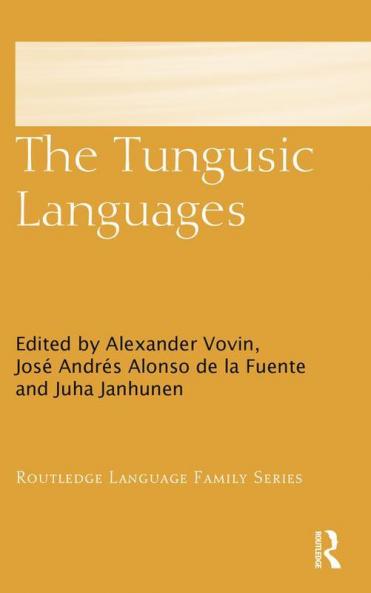
<p><i>The Tungusic Languages </i>is a survey of Tungusic, a language family which is seriously endangered today, but which at the time of its maximum spread was present all over Northeast Asia.</p><p>This volume offers a systematic succession of separate chapters on all the individual Tungusic languages, as well as a number of additional chapters containing contextual information on the language family as a whole, its background and current state, as well as its history of research and documentation. Manchu and its mediaeval ancestor Jurchen are important historical literary languages discussed in this volume, while the other Tungusic languages, around a dozen altogether, have always been spoken by small, local, though in some cases territorially widespread, populations engaged in traditional subsistence activities of the Eurasian taiga and steppe zones and the North Pacific coast.</p><p>All contributors to this volume are well-known specialists on their specific topics, and, importantly, all the authors of the chapters dealing with modern languages have personal experience of linguistic field work among Tungusic speakers.</p><p>This volume will be informative for scholars and students specialising in the languages and peoples of Northeast Asia, and will also be of interest to those engaged with linguistic typology, cultural anthropology, and ethnic history who wish to obtain information on the Tungusic languages.</p> <p><em>List of tables</em></p><p><em>List of contributors </em></p><p><em>Preface and acknowledgements </em></p><p><em>Technical notes </em></p><p><em>List of abbreviations </em></p><p><em>Chart of the Manchu script </em></p><p><em>Language map</em> </p><p>1. Tungusic as a language family <b> </b></p><p>Ethnic nomenclature</p><p>Data and sources </p><p>Internal taxonomy </p><p>Typological profile </p><p>Grammatical framework </p><p>References and further reading </p><p>2. Early Far Eastern sources on Tungusic </p><p>Chinese sources </p><p>Japanese sources </p><p>Korean sources </p><p>References and further reading </p><p>3. Early Western sources on Tungusic </p><p>Types of sources </p><p>Eighteenth century </p><p>Nineteenth century </p><p>References and further reading </p><p>4. Proto-Tungusic </p><p>Data and sources </p><p>Vowel system </p><p>Vowel harmony </p><p>Consonant system </p><p>Morpheme structure </p><p>Word formation </p><p>Number and case </p><p>Numerals </p><p>Pronouns</p><p>Person marking </p><p>Verbal stems </p><p>Verbal forms </p><p>Syntax </p><p>Lexical structure </p><p>References and further reading </p><p>5. Jurchen </p><p>Data and sources </p><p>Notational conventions</p><p>The writing system </p><p>Origin of the Jurchen script </p><p>Segmental structure </p><p>Nominal forms </p><p>Numerals </p><p>Pronouns </p><p>Verbal forms </p><p>Lexicon and language contacts </p><p>References and further reading </p><p>6. Written Manchu </p><p>Data and sources </p><p>Segmental structure </p><p>Phonotactics and morphophonology </p><p>Word formation </p><p>Number and case </p><p>Numerals </p><p>Pronouns </p><p>Participles </p><p>Converbs </p><p>Complex verbal forms </p><p>Imperatives </p><p>Syntax </p><p>Lexicon and language contacts </p><p>List of primary sources </p><p>References and further reading </p><p>7. Siberian Ewenki </p><p>Taxonomic status</p><p>Dialectal division </p><p>Data and sources</p><p>Segmental structure </p><p>Phonotactics and morphophonology </p><p>Word formation </p><p>Number and case </p><p>Numerals </p><p>Pronouns</p><p>Person marking </p><p>Verbal forms </p><p>Verbal functions </p><p>Syntax </p><p>Lexicon and language contacts </p><p>References and further reading </p><p>8. Orochen </p><p>Data and sources </p><p>Segmental structure </p><p>Phonotactics and morphophonology </p><p>Word formation </p><p>Number and case </p><p>Adjectives </p><p>Numerals </p><p>Pronouns</p><p>Person marking</p><p>Other word classes </p><p>Verbal morphology </p><p>Participles </p><p>Imperatives </p><p>Other modal forms </p><p>Converbs </p><p>Syntax </p><p>Lexicon and language contacts </p><p>References and further reading </p><p>9. Solon </p><p>Data and sources </p><p>Segmental structure </p><p>Phonotactics and morphophonology </p><p>Word formation </p><p>Number and case </p><p>Numerals </p><p>Pronouns </p><p>Person marking </p><p>Verbal morphology </p><p>Participles </p><p>Imperatives </p><p>Converbs </p><p>Phrase structure </p><p>Sentence types </p><p>Lexicon and language contacts </p><p>References and further reading </p><p>10. Neghidal </p><p>Data and sources </p><p>Segmental structure </p><p>Phonotactics and morphophonology </p><p>Word formation </p><p>Number and case </p><p>Numerals </p><p>Pronouns </p><p>Person marking </p><p>Verbal morphology </p><p>Participles </p><p>Finite tense and aspect </p><p>Imperatives </p><p>Other modal forms </p><p>Converbs</p><p>Syntax </p><p>Lexicon and language contacts </p><p>References and further reading </p><p>11. Ewen </p><p>Dialectal division </p><p>Data and sources </p><p>Segmental structure </p><p>Phonotactics and morphophonology </p><p>Word structure and word classes </p><p>Word formation</p><p>Number and case </p><p>Adjectives </p><p>Numerals </p><p>Pronouns </p><p>Person marking</p><p>Other word classes </p><p>Verbal morphology </p><p>Participles </p><p>Finite tense and mood </p><p>Converbs </p><p>Phrase structure </p><p>Sentence types </p><p>Passive and causative </p><p>Complex sentences </p><p>Lexicon and language contacts </p><p>References and further reading </p><p>12. Oroch </p><p>Taxonomic status </p><p>Data and sources </p><p>Segmental structure </p><p>Phonotactics and morphophonology </p><p>Word formation </p><p>Number and case </p><p>Numerals </p><p>Pronouns </p><p>Person marking </p><p>Other word classes </p><p>Verbal morphology </p><p>Voice and aspect </p><p>Participles </p><p>Imperatives </p><p>Other modal forms </p><p>Converbs </p><p>Syntax </p><p>Lexicon and language contacts </p><p>References and further reading </p><p>13. Udihe </p><p>Data and sources </p><p>Segmental structure </p><p>Phonotactics and morphophonology </p><p>Word formation </p><p>Number and case </p><p>Adjectives </p><p>Numerals </p><p>Pronouns </p><p>Person marking </p><p>Other word classes </p><p>Verbal morphology </p><p>Voice and aspect </p><p>Participles </p><p>Finite tense and mood </p><p>Converbs </p><p>Complex predicates </p><p>Syntax </p><p>Lexicon and language contacts </p><p>References and further reading </p><p>14. Nanai </p><p>Data and sources</p><p>Segmental structure </p><p>Phonotactics and morphophonology </p><p>Word formation </p><p>Number and case </p><p>Adjectives </p><p>Numerals </p><p>Pronouns </p><p>Person marking </p><p>Other word classes </p><p>Verbal morphology </p><p>Voice and aspect </p><p>Participles </p><p>Finite indicative forms </p><p>Imperatives </p><p>Other modal forms </p><p>Converbs </p><p>Syntax </p><p>Lexicon and language contacts </p><p>References and further reading </p><p>15. Ulcha </p><p>Taxonomic status </p><p>Data and sources </p><p>Segmental structure </p><p>Phonotactics and morphophonology </p><p>Word formation </p><p>Number and case </p><p>Adjectives </p><p>Numerals </p><p>Pronouns </p><p>Person marking </p><p>Other word classes </p><p>Verbal morphology </p><p>Voice and aspect </p><p>Participles </p><p>Finite indicative forms </p><p>Imperatives </p><p>Other modal forms </p><p>Converbs </p><p>Syntax </p><p>Lexicon and language contacts </p><p>References and further reading </p><p>16. Uilta </p><p>Data and sources </p><p>Segmental structure </p><p>Phonotactics and morphophonology </p><p>Word formation </p><p>Number and case </p><p>Numerals </p><p>Pronouns</p><p>Person marking </p><p>Verbal morphology </p><p>Participles </p><p>Finite indicative forms </p><p>Imperatives </p><p>Converbs </p><p>Phrase structure </p><p>Sentence types</p><p>Complex sentences </p><p>Lexicon and language contacts </p><p>References and further reading </p><p>17. Spoken Manchu </p><p>Dialectal division </p><p>Data and sources </p><p>Segmental structure </p><p>Phonotactics and morphophonology </p><p>Word formation </p><p>Number and case </p><p>Numerals </p><p>Pronouns</p><p>Verbal forms </p><p>Complex predicates </p><p>Sentence types </p><p>Complex sentences</p><p>Lexicon and language contacts </p><p>References and further reading </p><p>18. Sibe </p><p>Data and sources </p><p>Segmental structure </p><p>Phonotactics and morphophonology </p><p>Word formation </p><p>Number and case </p><p>Numerals </p><p>Pronouns</p><p>Verbal forms </p><p>Complex predicates </p><p>Syntax </p><p>Lexicon and language contacts </p><p>References and further reading </p><p>19. Sociolinguistic aspects of Tungusic </p><p>Demographic background </p><p>Legislational status </p><p>Data and sources </p><p>Ewenki as a supraregional language </p><p>Ewen in northeastern Siberia </p><p>Amur-Sakhalin region </p><p>Tungusic languages in education </p><p>Tungusic languages in public spheres </p><p>Future prospects </p><p>References and further reading </p><p>20. Tungusic in time and place </p><p>Data and sources </p><p>External relationships </p><p>Areal position </p><p>Protohistorical setting </p><p>Stages of expansion </p><p>Sic transit gloria </p><p>References and further reading </p><p>Index </p>

Piracy-free

Assured Quality

Secure Transactions

Fast Delivery

Sustainably Printed
Details
ISBN 13
9781138845039
Publication Date
-31-08-2023
Pages
-572
Weight
-894 grams
Dimensions
-156x234x31.39 mm
