


English




₹696
₹793
12.23% OFF
(All inclusive*)
Paperback
Delivery Options
Please enter pincode to check delivery time.
*COD & Shipping Charges may apply on certain items.
Review final details at checkout.
Looking to place a bulk order? SUBMIT DETAILS
Delivery Options
Please enter pincode to check delivery time.
*COD & Shipping Charges may apply on certain items.
Review final details at checkout.
About The Book
Description
Author
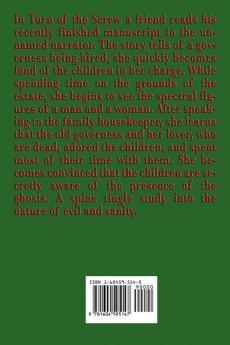
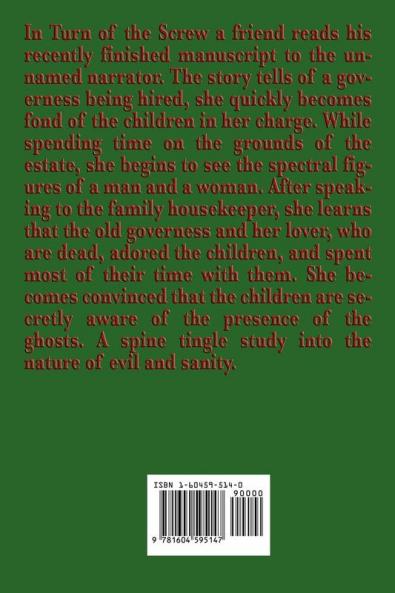
<p><strong><em>The Turn of the Screw</em> is Henry James's masterful novella of psychological ambiguity and supernatural suggestion.</strong></p><p>Set in an isolated English country estate the story follows a young governess charged with caring for two orphaned children. As she becomes increasingly convinced that malign presences haunt the household the narrative unfolds through her perspective-raising enduring questions about perception innocence repression and the reliability of testimony. James carefully withholds certainty allowing readers to confront the tension between supernatural explanation and psychological disturbance.</p><p>Compact yet layered the novella remains a central text in the study of Gothic fiction and modern psychological narrative. Its influence extends across literature theater film and literary criticism where it is frequently examined for its narrative structure and interpretive openness. <em>The Turn of the Screw</em> continues to provoke debate making it a foundational work for courses in Victorian literature modern fiction and narrative theory.</p>

Piracy-free

Assured Quality

Secure Transactions

Fast Delivery

Sustainably Printed
Details
ISBN 13
9781604595147
Publication Date
-29-10-2008
Pages
-112
Weight
-163 grams
Dimensions
-152x229x6.78 mm
