


English




Paperback
₹5216
₹5491
5.01% OFF
(All inclusive*)
Delivery Options
Please enter pincode to check delivery time.
*COD & Shipping Charges may apply on certain items.
Review final details at checkout.
Looking to place a bulk order? SUBMIT DETAILS

Piracy-free

Assured Quality

Secure Transactions
About The Book
Description
Author
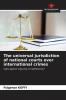
Traditionally the courts of a State have jurisdiction only over persons who have committed a crime within its territory (territorial jurisdiction). Gradually international law recognized that national courts could exercise forms of extraterritorial jurisdiction: to try crimes committed outside their territory by their nationals (active personal jurisdiction); against their nationals (passive personal jurisdiction); or against their essential security interests (actual jurisdiction). In addition international law has begun to recognise that the courts of a State may exercise jurisdiction in the absence of any connecting factors on behalf of the international community as a whole with respect to certain serious crimes of international concern (universal jurisdiction). Yet the attribute that allows a State to dispense justice has always been seen as a characteristic of its sovereignty. This study addresses the remaining problem between the principle of state sovereignty and the fight against impunity through the implementation of universal jurisdiction.
Piracy-free
Assured Quality
Secure Transactions
Delivery Options
Please enter pincode to check delivery time.
*COD & Shipping Charges may apply on certain items.
Review final details at checkout.
Details
ISBN 13
9786203738209
Publication Date
-28-05-2021
Pages
-132
Weight
-181 grams
Dimensions
-150x220x7.38 mm
