


English



Paperback
₹4417
(All inclusive*)
Delivery Options
Please enter pincode to check delivery time.
*COD & Shipping Charges may apply on certain items.
Review final details at checkout.
Looking to place a bulk order? SUBMIT DETAILS

Piracy-free

Assured Quality

Secure Transactions
About The Book
Description
Author
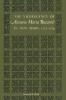
<p>When Antonio María Bucareli took up his duties in 1771 as the forty-sixth viceroy of New Spain he assumed command of a magnificent complexity of land areas large and small whose people constituted a cultural and social entity ranging from the traditional Apache to the European gentleman of the Enlightenment.</p> <p>He governed a key area at a significant time. Shortly before Bucareli's arrival in Mexico José de Gálvez had completed an intensive inspection of the country had instituted many reforms and was ready to present the new viceroy with progressive policies for administrative reorganization.</p> <p>How Bucareli a loyal indefatigable Spanish aristocrat reacted to the new order is the particular concern of this book. It examines the actions and reflections of this cautious and conservative man as they relate to certain major problems of his administration: defense the colonization of the Californias mining the Roman Catholic Church the interior provinces and-above all-filling Spanish coffers with Mexican pesos as resurgent Spain strove to regain her former position in world affairs.</p> <p>The period of Bucareli's viceregency is seen as a transitional one during which the seeds of the Enlightenment of change even of rebellion were sown but had not yet begun to sprout. Bucareli conservative by nature and training continued to administer New Spain on the basis of a well-established and traditional system although he supported changes of mere modification or those offering greater efficiency. Evidence of his dual success is the fact that revenues climbed steadily during his tenure and that Charles III was exceptionally pleased with his performance while at the same time he won from people of all stations a degree of respect and affection far beyond that usually accorded to a viceroy.</p> <p>Prior to the publication of <i>Bucareli</i> only two other full-scale studies of Spanish viceroys existed and both of them were concerned with sixteenth-century officials. The appearance of this book providing at once a study of an important figure and of the system of viceregal administration as it had developed by the latter part of the eighteenth century filled a long-existing gap in Latin American literature.</p> <p>The heart of this study comes from the prodigious correspondence that passed between the Viceroy and Madrid. Authority for most statements was found in the thousands of documents that the author perused in the Archivo General de Indies in Seville and in the Archivo General de la Nación in Mexico City.</p>
Piracy-free
Assured Quality
Secure Transactions
Delivery Options
Please enter pincode to check delivery time.
*COD & Shipping Charges may apply on certain items.
Review final details at checkout.
Details
ISBN 13
9780292739864
Publication Date
-01-01-1962
Pages
-332
Weight
-451 grams
Dimensions
-152x229x18.85 mm
