
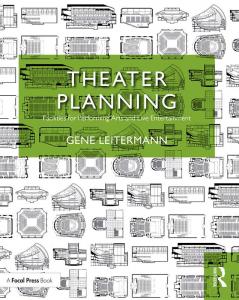





Theater Planning

About The Book

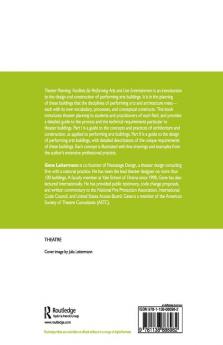
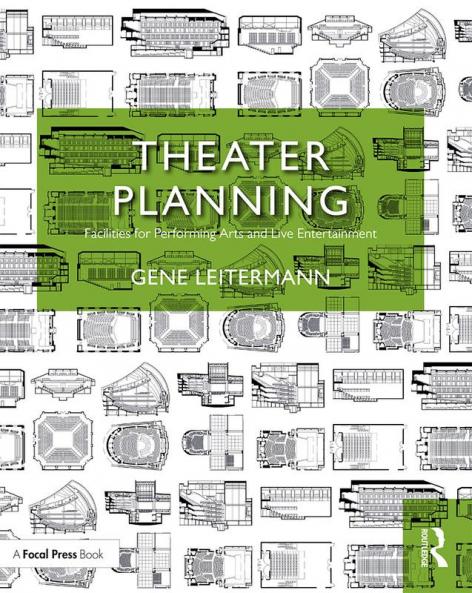
<p>This book introduces the concepts of theater planning, and provides a detailed guide to the process and the technical requirements particular to theater buildings. </p><p>Part I is a guide to the concepts and practices of architecture and construction, as applied to performing arts buildings. Part II is a guide to the design of performing arts buildings, with detailed descriptions of the unique requirements of these buildings. Each concept is illustrated with line drawings and examples from the author’s extensive professional practice.</p><p>This book is written for students in Theatre Planning courses, along with working practitioners.</p> <p>Table of Contents</p><p>Part I Context and process</p><p>1 Theater buildings</p><p>2 Project roles</p><p>3 Project phases</p><p>4 Project delivery methods</p><p>5 Pre-design process</p><p>6 Design process</p><p>7 Building regulations </p><p>8 Project budgets</p><p>Part II Planning</p><p>9 Proscenium stages</p><p>10 Forestage zone</p><p>11 Other stage forms</p><p>12 Audience sightlines</p><p>13 Audience seating</p><p>14 Auditorium design</p><p>15 Technical elements </p><p>16 Public spaces</p><p>17 Back-of-house spaces</p><p>List of Figures</p><p>Chapter 1</p><p>Figure 1.1 Drama theater forms</p><p>Figure 1.2 Fichandler Theatre, Arena Stage, Washington, DC</p><p>Figure 1.3 Ruth Caplin Theatre, University of Virginia, Charlottesville, Virginia</p><p>Figure 1.4 Studio, Tempe Center for the Arts, Tempe, Arizona</p><p>Figure 1.5 Kay Theatre, Clarice Smith Performing Arts Center, College Park, Maryland </p><p>Figure 1.6 Studzinski Recital Hall, Bowdoin College, Brunswick, Maine </p><p>Figure 1.7 Laura Turner Concert Hall, Schermerhorn Symphony Center, Nashville, Tennessee</p><p>Figure 1.8 Helzberg Concert Hall, Kauffman Center for the Performing Arts, Kansas City, Missouri</p><p>Figure 1.9 Oslo Opera House, Oslo, Norway</p><p>Figure 1.10 Dance Theatre, Clarice Smith Performing Arts Center, College Park, Maryland</p><p>Figure 1.11 Overture Hall, Overture Center, Madison, Wisconsin</p><p>Figure 1.12 Dolby Theatre (formerly Kodak Theatre), Hollywood, California</p><p>Chapter 2</p><p>Figure 2.1 Primary contractual relationships</p><p>Figure 2.2 Simple owner structure</p><p>Figure 2.3 Owner with program manager</p><p>Figure 2.4 Core design team working for the architect</p><p>Figure 2.5 Core design team working for owner </p><p>Chapter 3</p><p>Figure 3.1 Comparison of project phases</p><p>Figure 3.2 Opportunity for savings versus design fees spent</p><p>Chapter 4</p><p>Figure 4.1 Design-bid-build</p><p>Figure 4.2 Design-bid-build versus fast track</p><p>Figure 4.3 Multiple prime contracts</p><p>Figure 4.4 Design-build</p><p>Figure 4.5 Agency construction manager</p><p>Figure 4.6 Construction manager at risk</p><p>Figure 4.7 Integrated project delivery</p><p>Chapter 5</p><p>Figure 5.1 Needs assessment example: Overture Center, Madison, Wisconsin</p><p>Figure 5.2 Area definitions for performing arts buildings</p><p>Chapter 6</p><p>Figure 6.1 Options for 400-seat theater form</p><p>Figure 6.2 400-seat theater footprint and volume study in Broadway form</p><p>Figure 6.3 400-seat theater conceptual diagram</p><p>Figure 6.4 400-seat theater plan and section drawings</p><p>Figure 6.5 400-seat theater geometry study</p><p>Figure 6.6 400-seat theater material and finish study</p><p>Figure 6.7 Completed 400-seat theater</p><p>Figure 6.8 Site plan showing context</p><p>Figure 6.9 Conceptual site plan</p><p>Figure 6.10 Functional site diagram</p><p>Figure 6.11 Site plan</p><p>Figure 6.12 Block model</p><p>Figure 6.13 Site rendering</p><p>Figure 6.14 Site rendering</p><p>Figure 6.15 Site model</p><p>Figure 6.16 Site rendering</p><p>Figure 6.17 Completed building</p><p>Figure 6.18 Planning diagrams</p><p>Figure 6.19 Planning diagrams</p><p>Figure 6.20 Floor plans</p><p>Figure 6.21 Plan and section diagrams</p><p>Figure 6.22 Lobby rendering—schematic design</p><p>Figure 6.23 Lobby rendering—design development</p><p>Figure 6.24 Completed lobby</p><p>Figure 6.25 Crossover material and finish studies</p><p>Figure 6.26 Completed crossover</p><p>Chapter 9</p><p>Figure 9.1 Golden rectangle</p><p>Figure 9.2 Stage plan and transverse section</p><p>Figure 9.3 Acting area (after Burris-Meyer and Cole)</p><p>Figure 9.4 Scenery area (after Burris-Meyer and Cole)</p><p>Figure 9.5 Circulation and work area (after Burris-Meyer and Cole)</p><p>Figure 9.6 Percentage of audience with full view of backdrop</p><p>Figure 9.7 Proscenium widths of Broadway theaters</p><p>Figure 9.8 Modern dance footprint</p><p>Figure 9.9 Classical dance footprint</p><p>Figure 9.10 Opera house stages</p><p>Chapter 10</p><p>Figure 10.1 Forestage zone</p><p>Figure 10.2 Orchestra pit geometry and sightlines</p><p>Figure 10.3 Orchestra pit configurations</p><p>Chapter 11</p><p>Figure 11.1 Thrust stages </p><p>Figure 11.2 Open stages</p><p>Figure 11.3 Arena stages </p><p>Figure 11.4 Recital halls</p><p>Figure 11.5 Concert halls</p><p>Figure 11.6 Orchestra accommodation in proscenium theaters</p><p>Chapter 12</p><p>Figure 12.1 Seated spectator</p><p>Figure 12.2 Horizontal sightlines</p><p>Figure 12.3 Vertical sightlines</p><p>Figure 12.4 Constant rise sightlines</p><p>Figure 12.5 Isacoustic (isodomal) rise sightlines</p><p>Figure 12.6 First and second row vision</p><p>Figure 12.7 Three approaches to chair layout</p><p>Figure 12.8 Effect of v and h values</p><p>Figure 12.9 Venues without balconies </p><p>Figure 12.10 Crossaisle sightlines</p><p>Figure 12.11 Oblique sightlines</p><p>Figure 12.12 Playhouses with balconies</p><p>Figure 12.13 Concert halls and opera houses</p><p>Figure 12.14 Multipurpose theaters</p><p>Chapter 13</p><p>Figure 13.1 Fixed auditorium chairs and wheelchairs spaces</p><p>Figure 13.2 Fixed auditorium chairs on (a) shallow slope and (b) steep slope</p><p>Figure 13.3 Catchment area example (after NFPA)</p><p>Figure 13.4 Catchment area example with crossaisle</p><p>Chapter 14</p><p>Figure 14.1 Typical seating density in (a) early twentieth century auditorium and (b) early twenty-first century auditorium</p><p>Figure 14.2 Globe Theatre, London</p><p>Figure 14.3 Corral de Comedias, Almagro, Spain</p><p>Figure 14.4 Symphony Hall, Boston</p><p>Figure 14.5 Laura Turner Concert Hall, Schermerhorn Symphony Center, Nashville, Tennessee</p><p>Figure 14.6 Philharmonic Hall, Szczecin, Poland</p><p>Figure 14.7 Teatro Argentina, Rome</p><p>Figure 14.8 Paris Opéra (Palais Garnier), Paris</p><p>Figure 14.9 Teatro Colon, Buenos Aires, Argentina</p><p>Figure 14.10 Ford’s Theater, Washington, DC</p><p>Figure 14.11 Auditorium Theatre, Chicago</p><p>Figure 14.12 Lyceum Theatre, New York</p><p>Figure 14.13 Detail of a Medieval scaffold stage</p><p>Figure 14.14 Theater of Epidaurus, Greece</p><p>Figure 14.15 Roman theater at Aspendos, Pamphylia, (modern Turkey)</p><p>Figure 14.16 Teatro Farnese, Parma, Italy</p><p>Figure 14.17 Fichandler Theatre, Arena Stage, Washington, DC</p><p>Figure 14.18 Berliner Philharmonie, Berlin</p><p>Figure 14.19 Helzberg Concert Hall, Kauffman Center for the Performing Arts, Kansas City, Missouri</p><p>Figure 14.20 Bayreuth Festspielhaus, Bayreuth, Germany</p><p>Figure 14.21 Well’s Theatre, Norfolk, Virginia</p><p>Figure 14.22 Shubert Theatre, New Haven, Connecticut</p><p>Figure 14.23 Malmö Opera (formerly Malmö Stadsteater), Malmö, Sweden</p><p>Figure 14.24 Marion Oliver McCaw Hall, Seattle, Washington</p><p>Figure 14.25 Five approaches to side wall architecture</p><p>Figure 14.26 Overture Hall, Overture Center, Madison, Wisconsin</p><p>Figure 14.27 Radio City Music Hall, New York</p><p>Chapter 15</p><p>Figure 15.1 Controls rooms at rear of main seating level</p><p>Figure 15.2 Control room sightlines </p><p>Figure 15.3 Sound cockpit lift and wagon arrangement </p><p>Figure 15.4 Followspot room sightlines </p><p>Figure 15.5 Front-of-house catwalk study </p><p>Figure 15.6 Front-of-house lighting provisions </p><p>Chapter 16</p><p>Figure 16.1 Standard body ellipse </p><p>Figure 16.2 Standard body ellipse in 10-square-foot area (typical lobby benchmark)</p><p>Figure 16.3 Lobby density expressed as net square feet per seat</p><p>List of Tables</p><p>Chapter 1</p><p>Table 1.1 Typical theater forms and seat counts by performance type</p><p>Chapter 2</p><p>Table 2.1 Owner and user example: Overture Center, Madison, Wisconsin</p><p>Table 2.2 Design team example: Overture Center, Madison, Wisconsin</p><p>Chapter 3</p><p>Table 3.1 CSI MasterFormat Divisions</p><p>Table 3.2 Contract Document Drawing Volumes: Overture Center, Madison Wisconsin</p><p>Chapter 5</p><p>Table 5.1 Example space list</p><p>Chapter 7</p><p>Table 7.1 Accessibility legislation affecting the design of performance facilities</p><p>Chapter 8</p><p>Table 8.1 Typical project cost components</p><p>Table 8.2 Simplified project budget</p><p>Chapter 9</p><p>Table 9.1 Stage dimension ratios</p><p>Table 9.2 Broadway theaters</p><p>Table 9.3 Regional theaters</p><p>Table 9.4 Dance theaters</p><p>Table 9.5 Opera houses</p><p>Table 9.6 Multipurpose halls</p><p>Table 9.7 School halls</p><p>Chapter 13</p><p>Table 13.1 Required number of wheelchair spaces </p><p>Table 13.2 Minimum aisle widths per IBC 2015 in inches</p>
Piracy-free
Piracy-free
Assured Quality
Assured Quality
Secure Transactions
Secure Transactions
Delivery Options
Please enter pincode to check delivery time.
*COD & Shipping Charges may apply on certain items.
Review final details at checkout.
downArrow

Details


LOOKING TO PLACE A BULK ORDER?CLICK HERE