

English


Paperback
₹1316
(All inclusive*)
Delivery Options
Please enter pincode to check delivery time.
*COD & Shipping Charges may apply on certain items.
Review final details at checkout.
Looking to place a bulk order? SUBMIT DETAILS

Piracy-free

Assured Quality

Secure Transactions
About The Book
Description
Author
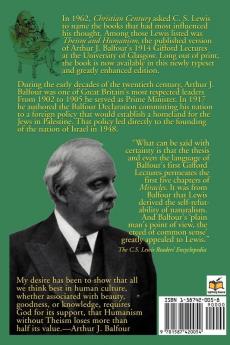
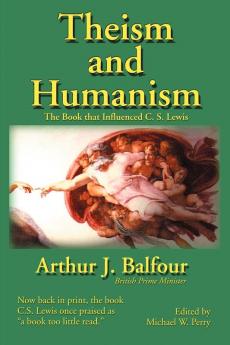
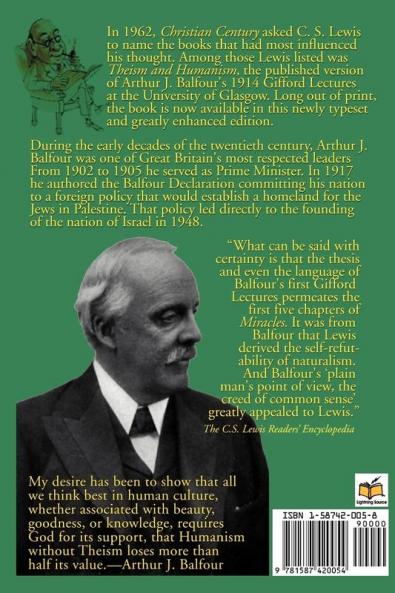
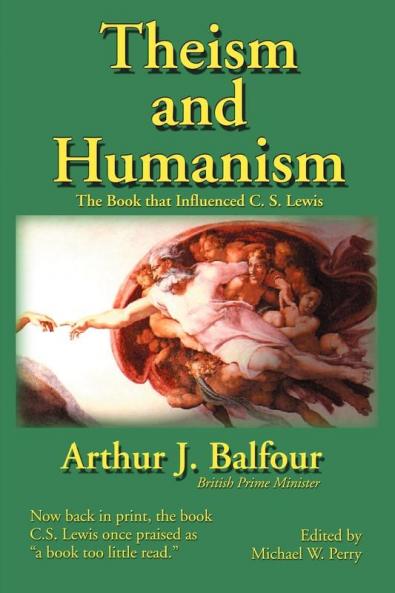
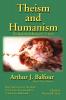
In 1962 Christian Century asked the well-known Christian writer C. S. Lewis to name the books that had most influenced his thought. Among those that Lewis listed was Arthur J. Balfours Theism and Humanism (1915). This was no passing whim. Almost twenty years earlier in 1944 Lewis had lamented in Is Theology Poetry that Theism was a book too little read. Many others shared Lewis enthusiasm. When Balfour gave the original lectures on which the book was based some 2000 people crowded into Bute Hall at the University of Glasgow on a weekday winter afternoons to cheer and laugh. Even more telling they kept coming back week after week for all ten speeches. Even the staid Times of London commented on the wildly enthusiastic audiences and noted the diversity of those attending from citizens and students to professors. Unfortunately until now the book hasnt been that easy to find. Copies have only been available on the used market and were thus rare and relatively expensive. This newly typeset edition and enhanced makes the book inexpensive and widely available. Balfour was a talented writer and perhaps the most intelligent British Prime Minister of the twentieth century. During World War One he replaced Winston Churchill as First Lord of the Admiralty and went on to become Foreign Secretary. In the latter office he was responsible for the 1917 Balfour Declaration committing Great Britain to the establishment of a Jewish homeland in Palestine. It is no exaggeration to say that Israel owes its existence to Balfour. Theism and Humanism is based on a 1914 Gifford Lecture that Balfour gave at the University of Glasgow. All the original text is included along with over 50 pages of additional material. There are 11 sketches of Balfour adapted from political cartoons in Punch magazine. There are four appendices taken from his other writings including the marvelous A Catechism for Naturalism (which sent the arch-agnostic Thomas Huxley better known as Darwins Bulldog into a fit of rage). Theres also a glossary of people and terms mentioned in the book and a detailed index. Finally this new edition includes brief quotes from Balfours other writings to highlight what he is saying. The second edition improves on the first by adding to each chapter in the original the extensive coverage that The Times of London gave to Balfours original speech. It also includes three letters by C. S. Lewis on themes closely related to Balfours book. Balfours topic is naturalism the belief that all that exists are natural processes. He challenges those who believe in it to come up with a rationale for what they hold dearest--human reason human rights and the importance of art--based solely on naturalism. He believes that cannot be done and summarizes his book in these words: My desire has been to show that all we think best in human culture whether associated with beauty goodness or knowledge requires God for its support that Humanism without Theism loses more than half its value. If you like philosophy and provocative ideas this book is perfect for you. The Cambridge-educated Balfour was very knowledgeable about science. (He was the President of the British Association for the Advancement of Science in 1904 and his brother was a talented scientist.) That makes this book a useful complement to the Oxford-educated Lewis whose specialty was literature.
Piracy-free
Assured Quality
Secure Transactions
Delivery Options
Please enter pincode to check delivery time.
*COD & Shipping Charges may apply on certain items.
Review final details at checkout.
Details
ISBN 13
9781587420054
Publication Date
-01-10-2000
Pages
-204
Weight
-284 grams
Dimensions
-152x229x11.86 mm
