



Paperback
₹2233
₹2326
4% OFF
(All inclusive*)
Delivery Options
Please enter pincode to check delivery time.
*COD & Shipping Charges may apply on certain items.
Review final details at checkout.
Looking to place a bulk order? SUBMIT DETAILS

Piracy-free

Assured Quality

Secure Transactions
About The Book
Description
Author(s)
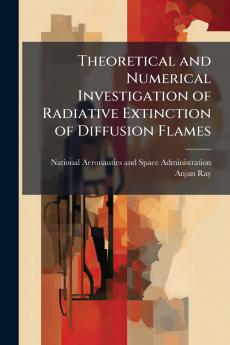
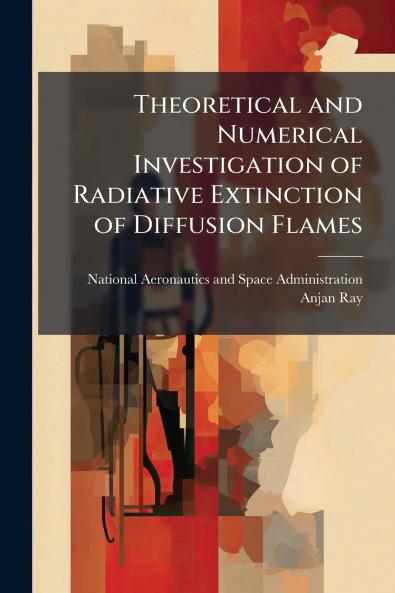
<p>The influence of soot radiation on diffusion flames was investigated using both analytical and numerical techniques. Soot generated in diffusion flames dominate the flame radiation over gaseous combustion products and can significantly lower the temperature of the flame. In low gravity situations there can be significant accumulation of soot and combustion products in the vicinity of the primary reaction zone owing to the absence of any convective buoyant flow. Such situations may result in substantial suppression of chemical activities in a flame and the possibility of a radiative extinction may also be anticipated. The purpose of this work was to not only investigate the possibility of radiative extinction of a diffusion flame but also to qualitatively and quantitatively analyze the influence of soot radiation on a diffusion flame. In this study first a hypothetical radiative loss profile of the form of a sech(sup 2) was assumed to influence a pure diffusion flame. It was observed that the reaction zone can under certain circumstances move through the radiative loss zone and locate itself on the fuel side of the loss zone contrary to our initial postulate. On increasing the intensity and/or width of the loss zone it was possible to extinguish the flame and extinction plots were generated. In the presence of a convective flow however the movement of the temperature and reaction rate peaks indicated that the flame behavior is more complicated compared to a pure diffusional flame. A comprehensive model of soot formation oxidation and radiation was used in a more involved analysis. The soot model of Syed Stewart and Moss was used for soot nucleation and growth and the model of Nagle and Strickland-Constable was used for soot oxidation. The soot radiation was considered in the optically thin limit. An analysis of the flame structure revealed that the radiative loss term is countered both by the reaction term and the diffusion term.</p><p>This work has been selected by scholars as being culturally important and is part of the knowledge base of civilization as we know it. This work was reproduced from the original artifact and remains as true to the original work as possible. Therefore you will see the original copyright references library stamps (as most of these works have been housed in our most important libraries around the world) and other notations in the work.</p><p>This work is in the public domain in the United States of America and possibly other nations. Within the United States you may freely copy and distribute this work as no entity (individual or corporate) has a copyright on the body of the work.</p><p>As a reproduction of a historical artifact this work may contain missing or blurred pages poor pictures errant marks etc. Scholars believe and we concur that this work is important enough to be preserved reproduced and made generally available to the public. We appreciate your support of the preservation process and thank you for being an important part of keeping this knowledge alive and relevant.</p>
Piracy-free
Assured Quality
Secure Transactions
Delivery Options
Please enter pincode to check delivery time.
*COD & Shipping Charges may apply on certain items.
Review final details at checkout.
Details
ISBN 13
9781288915521
Publication Date
-13-03-2013
Pages
-222
Weight
-322 grams
Dimensions
-156x234x12 mm
