


English


Paperback
₹5896
₹7696
23.39% OFF
(All inclusive*)
Delivery Options
Please enter pincode to check delivery time.
*COD & Shipping Charges may apply on certain items.
Review final details at checkout.
Looking to place a bulk order? SUBMIT DETAILS
Delivery Options
Please enter pincode to check delivery time.
*COD & Shipping Charges may apply on certain items.
Review final details at checkout.
About The Book
Description
Author
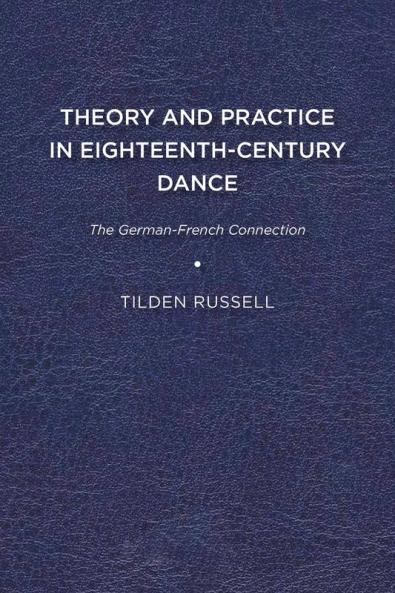
<div> <p>This book is about the intersection of two evolving dance-historical realms-theory and practice-during the first two decades of the eighteenth century. France was the source of works on notation choreography and repertoire that dominated European dance practice until the 1780s. While these French inventions were welcomed and used in Germany German dance writers responded by producing an important body of work on dance theory. This book examines consequences in Germany of this asymmetrical confrontation of dance perspectives.</p> <p>Between 1703 and 1717 in Germany a coherent theory of dance was postulated that called itself dance theory comprehended why it was a theory and clearly rationally distinguished itself from practice. This flowering of dance-theoretical writing was contemporaneous with the appearance of Beauchamps-Feuillet notation in the&nbsp;<i>Chorégraphie</i>&nbsp;of Raoul Auger Feuillet (Paris 1700 1701). Beauchamps-Feuillet notation was the ideal written representation of the dance style known as&nbsp;<i>la belle danse</i>&nbsp;and practiced in both the ballroom and the theater. Its publication enabled the spread of&nbsp;<i>belle danse</i>&nbsp;to the French provinces and internationally. This spread encouraged the publication of new practical works (manuals choreographies&nbsp;<i>recueils</i>) on how to make steps and how to dance current dances as well as of new dance treatises in different languages.</p> <p>The&nbsp;<i>Rechtschaffener Tantzmeister</i>&nbsp;by Gottfried Taubert (Leipzig 1717)&nbsp;includes a translated edition of Feuillet's&nbsp;<i>Chorégraphie</i>.&nbsp;<i>Theory and Practice in Eighteenth-Century Dance&nbsp;</i>addresses&nbsp;how Taubert and his contemporary German authors of dance treatises (Samuel Rudolph Behr Johann Pasch Louis Bonin) became familiar with Beauchamps-Feuillet notation and acknowledged the&nbsp;<i>Chorégraphie</i>&nbsp;in their own work and how Taubert's translation of the&nbsp;<i>Chorégraphie</i>&nbsp;spread its influence northward and eastward in Europe.&nbsp;This book also examines the personal and literary interrelationships between the German writers on dance between 1703 and 1717 and their invention of a&nbsp;<i>theoria</i>&nbsp;of dance as a counterbalance to dance&nbsp;praxis&nbsp;comparing their dance-theoretical ideas with those of John Weaver in England and assimilating them all in a cohesive and inclusive description of dance theory in Europe by 1721.<br> <br> Published by University of Delaware Press. Distributed worldwide by Rutgers University Press.</p> </div>

Piracy-free

Assured Quality

Secure Transactions

Fast Delivery

Sustainably Printed
Details
ISBN 13
9781644530221
Publication Date
-10-11-2017
Pages
-242
Weight
-333 grams
Dimensions
-152x229x13.96 mm
