

English


₹1689
₹1853
8.85% OFF
(All inclusive*)
Paperback
Delivery Options
Please enter pincode to check delivery time.
*COD & Shipping Charges may apply on certain items.
Review final details at checkout.
Looking to place a bulk order? SUBMIT DETAILS
Delivery Options
Please enter pincode to check delivery time.
*COD & Shipping Charges may apply on certain items.
Review final details at checkout.
About The Book
Description
Author
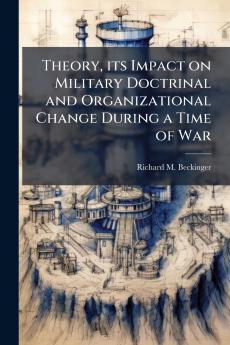
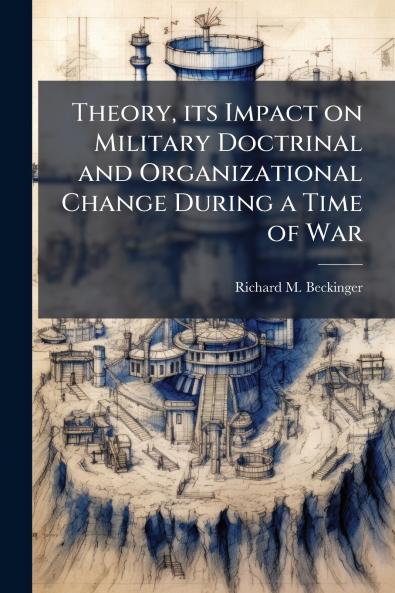
<p>This monograph's purpose is to explore theory and its impact on military organizational and doctrinal changes during a time of war. Answering the research question will prove useful in contributing to the professional dialogue for the US to continue to maintain the best led trained and equipped military in the world. One underlying assumption was that rationally theory should drive doctrine which produces organizational change and that technological or capabilities improvements (prior to during and after change) would influence but not dictate the wholesale refinement of either theory or doctrine. The research methodology used historic analysis of warfare theorists case study comparison of past success and failure and scrutiny of lessons only just learned from Operation Iraqi Freedom (OIF) and Operation Enduring Freedom (OEF). The starting point for the study was the importance of theory the role of theory development in producing refinement in the application of combat power with a brief review of past and contemporary theorists' impact on doctrine as well as organizational structures. This study relied on a historical perspective with a dialectic approach to show the impact of change during a time of major wars specifically during World War II within a conventional warfare framework of both friend and foe and the unconventional American experience in Vietnam. This was proceeded by a focused discussion on contemporary lessons learned during OIF and OEF to include observations in 2004-2005 from the Joint Readiness Training Center (JRTC) Combat Training Center (CTC) on Brigade Combat Team (BCT) transformation. Observations are on modular transformation by the active force and mobilization of the reserves legacy BCT closing with thoughts on changes generated within the Army Aviation community during the Global War On Terrorism (GWOT). The conclusion on the role of theory was that historically each service has gravitated to what it identified as the m</p><p>This work has been selected by scholars as being culturally important and is part of the knowledge base of civilization as we know it. This work was reproduced from the original artifact and remains as true to the original work as possible. Therefore you will see the original copyright references library stamps (as most of these works have been housed in our most important libraries around the world) and other notations in the work.</p><p>This work is in the public domain in the United States of America and possibly other nations. Within the United States you may freely copy and distribute this work as no entity (individual or corporate) has a copyright on the body of the work.</p><p>As a reproduction of a historical artifact this work may contain missing or blurred pages poor pictures errant marks etc. Scholars believe and we concur that this work is important enough to be preserved reproduced and made generally available to the public. We appreciate your support of the preservation process and thank you for being an important part of keeping this knowledge alive and relevant.</p>

Piracy-free

Assured Quality

Secure Transactions

Fast Delivery

Sustainably Printed
Details
ISBN 13
9781288324965
Publication Date
-21-11-2012
Pages
-64
Weight
-106 grams
Dimensions
-156x234x3.47 mm
