

English


Paperback
₹3697
(All inclusive*)
Delivery Options
Please enter pincode to check delivery time.
*COD & Shipping Charges may apply on certain items.
Review final details at checkout.
Looking to place a bulk order? SUBMIT DETAILS
Delivery Options
Please enter pincode to check delivery time.
*COD & Shipping Charges may apply on certain items.
Review final details at checkout.
About The Book
Description
Author
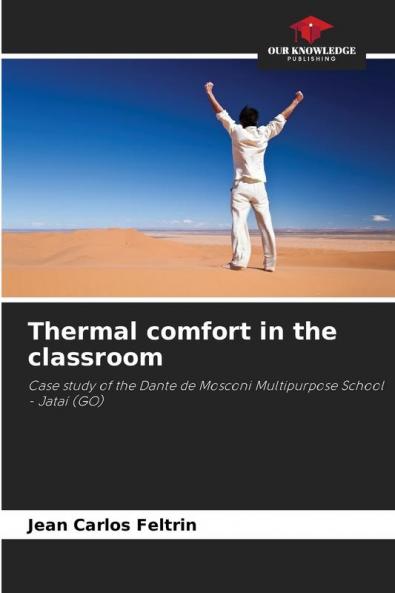
The growth of cities and the occupation of urban land have had a negative impact on thermal comfort. The aim was therefore to analyze and compare thermal comfort from October to December 2015 in some classrooms at the Dante de Mosconi Polyvalent State School in the city of Jataí in the Microregion of Southwest Goiás classified as Zone 6 (bioclimatic strategies) defined as H - Evaporative cooling and thermal mass for cooling J - Selective ventilation C- Heavy internal fences according to NBR 15.220-3. To do this three Thermohygrometers were installed in classrooms in classes A B and C. The thermal comfort assessment methods used were Fanger's adopted by ISO 7730 (1987) on a scale of Predicted Mean Vote (PMV) and Predicted Percentage of Dissatisfied (PPD) and questionnaire application. In October the highest absolute maximum temperatures occurred in rooms A and C with 34.0°C and 34.9°C respectively. In November room B had the highest absolute maximum temperature (32.7°C) followed by rooms A (32.6°C) and C (31.4°C). In December the room with the absolute maximum temperature was B (33.3°C) followed by room C (32.6°C).

Piracy-free

Assured Quality

Secure Transactions

Fast Delivery

Sustainably Printed
Details
ISBN 13
9786207771691
Publication Date
-09-07-2024
Pages
-60
Weight
-91 grams
Dimensions
-152x229x3.65 mm
