

English


Paperback
₹1561
₹1600
2.44% OFF
(All inclusive*)
Delivery Options
Please enter pincode to check delivery time.
*COD & Shipping Charges may apply on certain items.
Review final details at checkout.
Looking to place a bulk order? SUBMIT DETAILS

Piracy-free

Assured Quality

Secure Transactions
About The Book
Description
Author
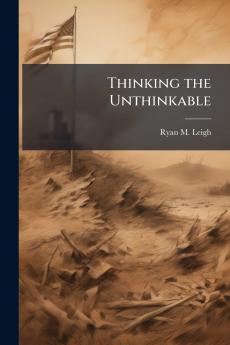
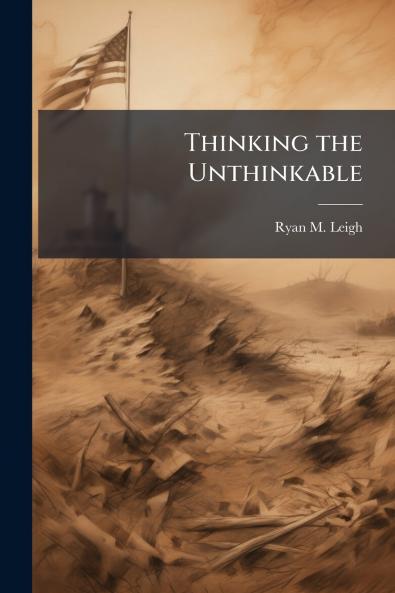
<p>The purpose of this monograph is to explore the operational impacts of differentiating between an insurgency and a civil war. At first glance the distinction between the two is just a matter of scale but there are other differences as well. Comparing and contrasting civil war with insurgency focuses on the purpose behind the violence and less on the methods employed in the fighting. Using Afghanistan as a case study including the Taliban to account for the incumbent and challenger in the conflict this monograph shows that Afghanistan is currently in a state of civil war. The delineation between an insurgency and a civil war is vital to assessing the violence in Afghanistan. Proper classification and management of the violence is the key to success for U.S. efforts in Afghanistan. While the U.S. classifies the conflict in Afghanistan as an insurgency in reality it is a civil war. This failure to properly identify and classify the violence is impeding U.S. efforts at managing the conflict. This monograph develops benchmarks that signify a civil war and then applies them to Afghanistan to further support the hypothesis that Afghanistan is experiencing a civil war. The benchmarks for civil war developed here include a minimum of 1000 war-related deaths specifically both civilian and combatant casualties from physical attacks. The second criteria is validates that state sovereignty is challenged by the rebels. A necessary condition for these criteria is that the violence is occurring within the territory of the state in question. The third benchmark specifies that the State and its security apparatus is one of the principal agents conducting the fighting. The last three benchmarks clearly delineate a civil war from an insurgency. The first of these benchmarks is that the rebels mount an organized military opposition. This makes explicit the military opposition to the government whereas in an insurgency military opposition is just one of the many activities co</p><p>This work has been selected by scholars as being culturally important and is part of the knowledge base of civilization as we know it. This work was reproduced from the original artifact and remains as true to the original work as possible. Therefore you will see the original copyright references library stamps (as most of these works have been housed in our most important libraries around the world) and other notations in the work.</p><p>This work is in the public domain in the United States of America and possibly other nations. Within the United States you may freely copy and distribute this work as no entity (individual or corporate) has a copyright on the body of the work.</p><p>As a reproduction of a historical artifact this work may contain missing or blurred pages poor pictures errant marks etc. Scholars believe and we concur that this work is important enough to be preserved reproduced and made generally available to the public. We appreciate your support of the preservation process and thank you for being an important part of keeping this knowledge alive and relevant.</p>
Piracy-free
Assured Quality
Secure Transactions
Delivery Options
Please enter pincode to check delivery time.
*COD & Shipping Charges may apply on certain items.
Review final details at checkout.
Details
ISBN 13
9781288325023
Publication Date
-21-11-2012
Pages
-52
Weight
-89 grams
Dimensions
-156x234x2.84 mm
